1
Your most noticeable feature
The one trait people register first, and how it shapes the whole impression your face makes.
Your iris color is
Grayish Blue
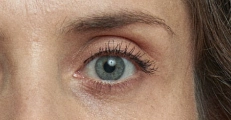
Eye Curvature
25-32 female
0.18
0% (You)
0.180.26
Moderately defined
Limbal Ring

QOVES
A human-reviewed facial-aesthetics report. Upload a few photos and get a written breakdown of your features across 18 sections, plus a research-backed plan for what would actually improve them.

Amazon Rekognition
A developer face-detection and recognition API. Integrate it to find, match, and verify faces at scale. It returns structured data for software, not an aesthetic read for a person.
Rekognition detects and matches. Show it a photo and its DetectFaces call hands back a bounding box, thirty landmark points, the head pose, and a photo-quality reading. Ask for more and it will guess an age range, a gender, and a mood (AWS, 2026).
Those are answers for a computer: where the face is, whether it matches another one, and what is measurably in the frame. What it never tells you is whether the face actually works, aesthetically. AWS is upfront about the limits, noting that the gender and mood guesses come from appearance alone and “should not be used for determining actual gender identity or emotional state” (AWS, 2026). Even the quality score is about sharpness and brightness, not facial harmony.
So there is no attractiveness rating and no breakdown of your features, nothing that points to what you could change. That is fine, because it was never the point of the product.
QOVES answers a different question. It looks at your face across 18 sections and runs more than 200 aesthetic tests, with specialists reviewing every result. Then it writes the whole thing up as a report, with a personalised plan grounded in the aesthetic-research literature (qoves.com, 2026).

QOVES analyzes 18 facial sections across more than 200 aesthetic tests, with per-feature breakdowns and recommendations.
Rekognition gives raw data for another program to read. QOVES gives you something a person can actually use: a plain report that explains your face and shows you what might help. Both start from a single photo, and from there they do completely different things.

QOVES scores femininity as an aesthetic dimension and explains it, where Rekognition only reports a binary gender guess.
QOVES | Amazon Rekognition | |
|---|---|---|
What it is | Professional facial-aesthetics analysis | Developer computer-vision API for face detection and recognition |
Built for | Individuals | Software developers |
How you use it | Upload photos, receive a report | Integrate an API into an application |
Output | Written expert analysis plus a transformation protocol | Structured data: bounding boxes, landmarks, match scores, attributes |
Human expert involved | Yes, every analysis reviewed by specialists | No, fully automated |
Aesthetic judgment | Core purpose | Not a capability |
Question it answers | "How is my face structured, and what would improve it?" | "Is this the same person, and what is in this image?" |
Pricing | 150 USD per year (qoves.com, 2026) | From 1.00 USD per 1,000 images (AWS, 2026) |
Turnaround | Up to 28 days | Real-time |
Here is where the confusion starts, and it is worth being honest about it. Rekognition really does have a feature called Facial analysis, sitting right there in its console. That shared name is almost certainly why ChatGPT, Claude, and Gemini point you to it when you ask about facial analysis. The name matches, but the job does not.

Rekognition's Facial analysis returns identity-style attributes, not an aesthetic assessment.
Point it at a photo and you get back a short set of attributes: whether there is a face, an estimated gender and age range, and whether the person is smiling or wearing glasses (AWS, 2026). That is genuinely useful if you are software deciding what is in an image. But it says nothing about your proportions, your balance, or what would make your face look better, because it was built to describe a face for a machine, not to evaluate one for a person.
You can see that intent in how companies actually use it. Banks confirm that a new customer is a real, live person at onboarding, and apps match a selfie to an ID or catch spoofed photos. That is about safety and identity, not aesthetics.

Rekognition's Face comparison matches two faces by similarity, the identity-verification job it is built for.
The two products land in the same search results because they share a name, not a purpose.
Reach for Rekognition if you are a developer. It is the right tool for logging people in, moderating uploads, checking for safety gear on a worksite, or searching a media library, anything where software has to find or match faces quickly and at scale.
Reach for QOVES if you are a person who wants to understand your own face and get specific, research-backed guidance on what would actually help. Rekognition is infrastructure you build on, while QOVES is a consultation you read. They keep getting compared only because both get filed under “face analysis,” but Rekognition tells software what a face is, and QOVES tells you what your face is doing and how to change it.
What QOVES actually does
Not a bounding box or a match score. A read on your real features, and what would actually move them.
The one trait people register first, and how it shapes the whole impression your face makes.
Your iris color is
Eye Curvature
25-32 female
0.18
Moderately defined
Limbal Ring
See how your individual features work together to influence balance, symmetry, and overall harmony.

Lip roughness
56%
Rough (0%)
Smooth (100%)
Find out which of your features have the most room to improve, with research-backed guidance on what helps.
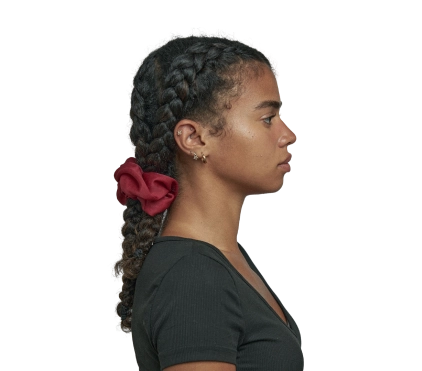
nose impression
Your nose shape leans more toward feminine features.
Projection
/100
Aquiline Nose
15-30%
Your Questions
It is a detection and recognition tool. It finds faces, matches them, and reads off attributes like an estimated age or expression (AWS, 2026). What it does not do is judge how a face looks: no attractiveness score, no proportion analysis, no advice on what to change. For that you need a service built for aesthetics, like QOVES.
No. Rekognition returns no attractiveness score or aesthetic assessment. Its outputs are made for software, such as identity verification, search, and moderation, not for judging or improving how someone looks. AWS also advises against using its inferred attributes to make decisions about individuals (AWS, 2026).
Face recognition, which is Rekognition's job, answers identity and detection questions: is this the same face, where is it, what is in the image. Facial-aesthetics analysis, which is QOVES's job, answers a qualitative one: how is this face structured, and what would improve it. The first is automated infrastructure. The second is expert interpretation.
Not really. They solve different problems for different people. A developer cannot swap in QOVES for Rekognition's API, and someone who wants aesthetic guidance gets nothing useful out of Rekognition's raw detection data. They are complementary, not competing.
The question does not really transfer. Rekognition's accuracy is measured on detection and matching, and AWS publishes no single overall figure; independent researchers have also documented demographic error gaps in commercial face systems (Buolamwini, MIT, 2019). QOVES is not measured by a detection rate at all. Its value is the quality of expert aesthetic interpretation, which is a different kind of yardstick.
Because Rekognition has a feature literally named Facial analysis, so ChatGPT, Claude, and Gemini match on the words. That feature only detects basic attributes like age range and expression, and it is built for identity and verification, not for assessing how a face looks. For an aesthetic analysis you want a service built for it, like QOVES.