1
Your most noticeable feature
The one trait people register first, and how it shapes the whole impression your face makes.
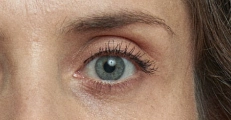
Your iris color is
Grayish Blue
Eye Curvature
25-32 female
0.18
0% (You)
0.180.26
Moderately defined
Limbal Ring
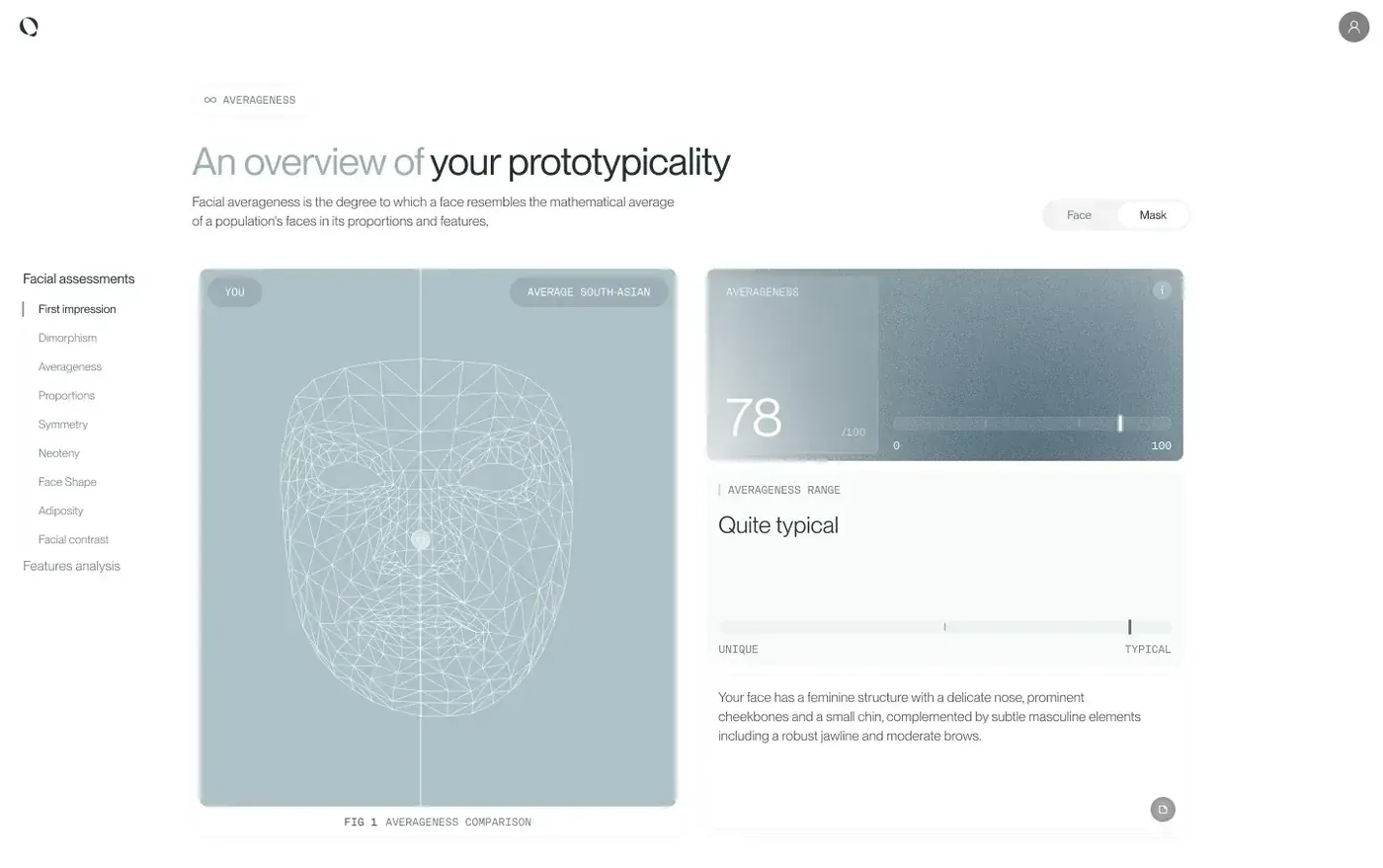
QOVES
A human-reviewed facial-aesthetics report. Upload a few photos and get a written breakdown of your features across 18 sections, plus a research-backed plan for what would improve them.
Azure Face API
Microsoft's cloud face service. Developers use it to find faces in a photo, match a selfie against a photo on file, and confirm a real person is present. It returns data for software, not an aesthetic read for a person.
Point Azure's face service at a photo and it hands back where the face sits in the frame, a few quality readings, and, if you ask, a yes or no on things like glasses or a tilted head (Microsoft, 2026). Its real work is matching and checking that someone is genuine: is this the same person as the photo on file, and is a living human here right now rather than a mask or a video.
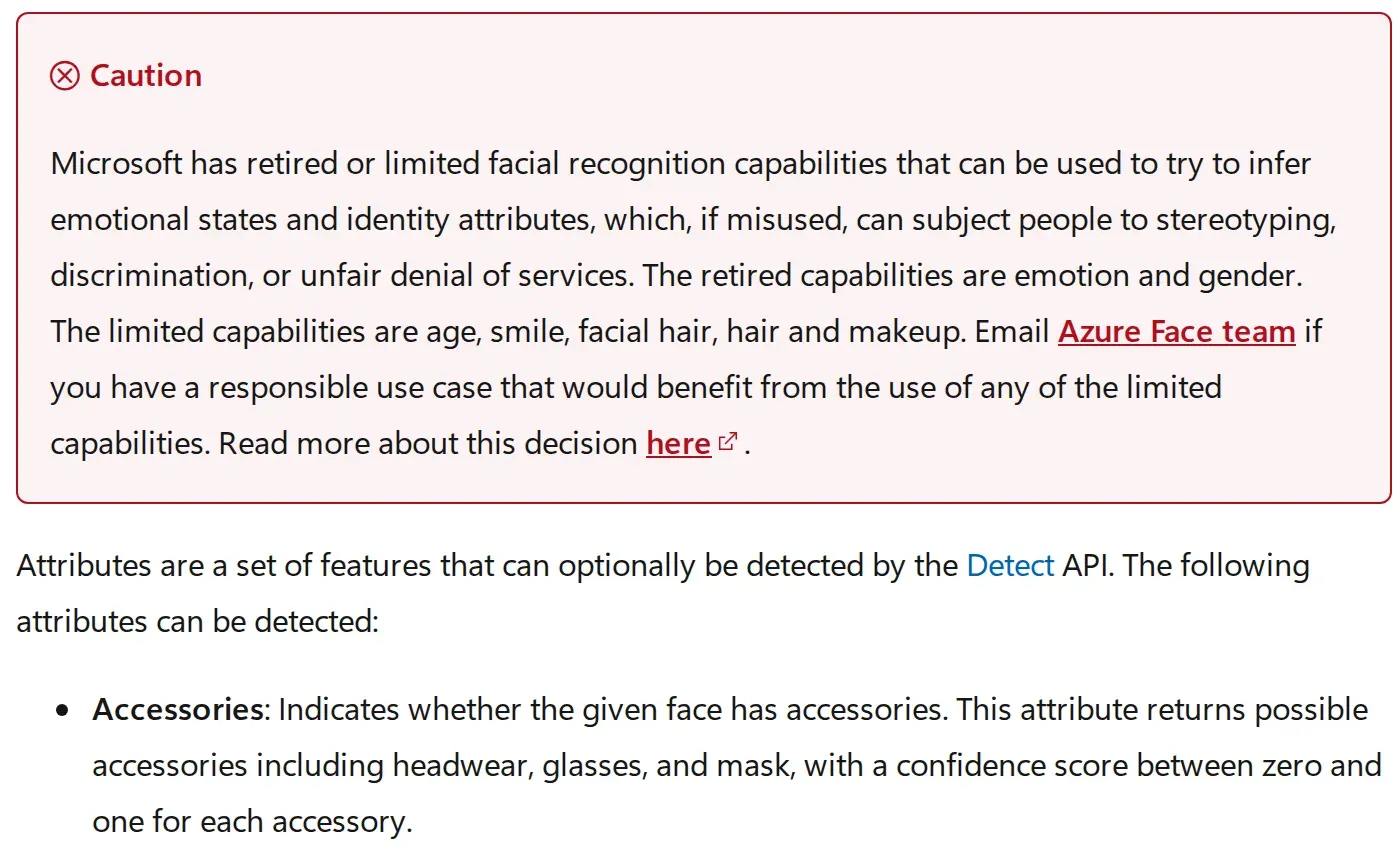
Microsoft built it for identity, and in 2022 it retired the features that used to guess emotion and gender, saying those inferences could feed stereotyping and unfair treatment, and limited age, smile and a few others to approved use cases (Microsoft, 2022). None of that touches whether a face works aesthetically. It offers no attractiveness reading and nothing about your proportions, which is fine, because that was never the point of the product.
There is a bigger catch, and it is not in the marketing. You cannot sign up for Azure's face service at all. Microsoft's documentation says access "is limited based on eligibility and usage criteria" and that the service "is only available to Microsoft managed customers and partners", with an intake form to apply (Microsoft, 2026). This is not a tool you can point at your own photo this afternoon, whatever you do for a living.
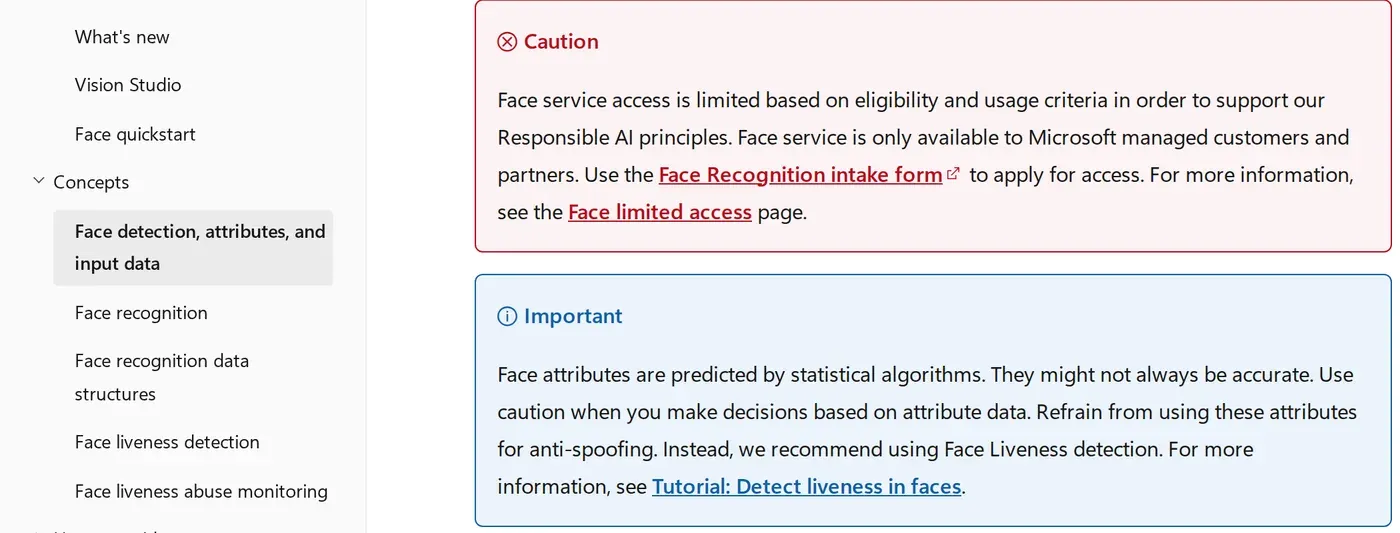
Microsoft's own documentation: the face service is limited to managed customers and partners, and its attributes come with a warning not to lean on them.
QOVES answers a different question. A team of specialists goes through 18 sections of the face, runs more than 200 aesthetic tests, and turns the results into a written report with a plan for what to work on, drawn from the aesthetic-research literature (qoves.com, 2026).
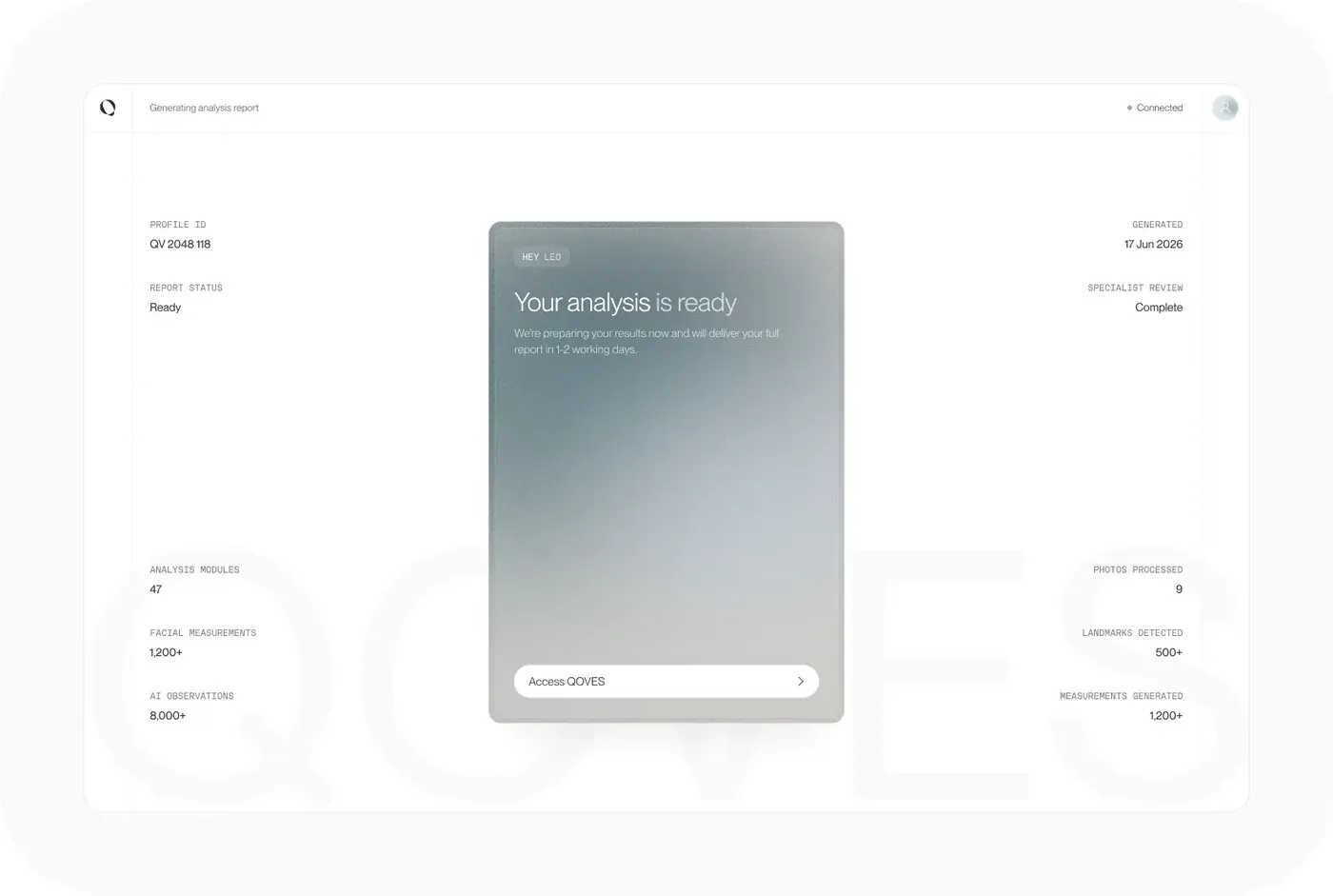
A QOVES analysis runs 47 modules and more than 1,200 measurements across nine photos.
Azure's answer is raw data for another program to act on, while QOVES gives you something a person can sit down and read: a plain explanation of your face and what could actually help.
QOVES | Azure Face API | |
|---|---|---|
What it is | Professional facial-aesthetics analysis | Developer service for face detection, verification, and liveness |
Built for | Individuals | Developers, on approval |
How you use it | Upload photos, receive a report | Connect the service to an application |
Output | Written expert analysis plus an improvement plan | Match scores, face positions, and yes-or-no checks for software |
Human expert involved | Yes, every analysis reviewed by specialists | No, fully automated |
Aesthetic judgment | Core purpose | Not a capability |
Question it answers | "How is my face structured, and what would improve it?" | "Is this the same person, and is it a real, live face?" |
Pricing | 150 USD per year (qoves.com, 2026) | Free to 30,000 checks a month, then about 1 USD per 1,000 (Microsoft, 2026) |
Turnaround | Up to 28 days | Real-time |
Microsoft's own documentation is where the confusion starts: it has a section called face detection and analysis, and its pages carry the words "facial analysis" (Microsoft, 2026). That shared label is almost certainly why ChatGPT, Claude, and Gemini point you to Azure when you ask about facial analysis. The name matches, but the job does not.
Point it at a photo and what comes back is technical: where the face is, whether the picture is blurry or badly lit, the angle of the head, whether the eyes or mouth are covered, and whether the image is clear enough to match against another (Microsoft, 2026). That is genuinely useful if you are software deciding what to do with a picture, but it says nothing about your proportions or your balance, and Microsoft pulled the only subjective readings it ever offered.
You can watch it happen without an Azure account. Microsoft runs a public Vision Studio demo that will not accept your own photo, but will run the service on its own sample portraits. It finds the face, draws a box round it, and reports one attribute: "Face mask: no". The JSON tab beside it holds a rectangle and the coordinates of the pupils, nose tip and mouth. That is the product working correctly.
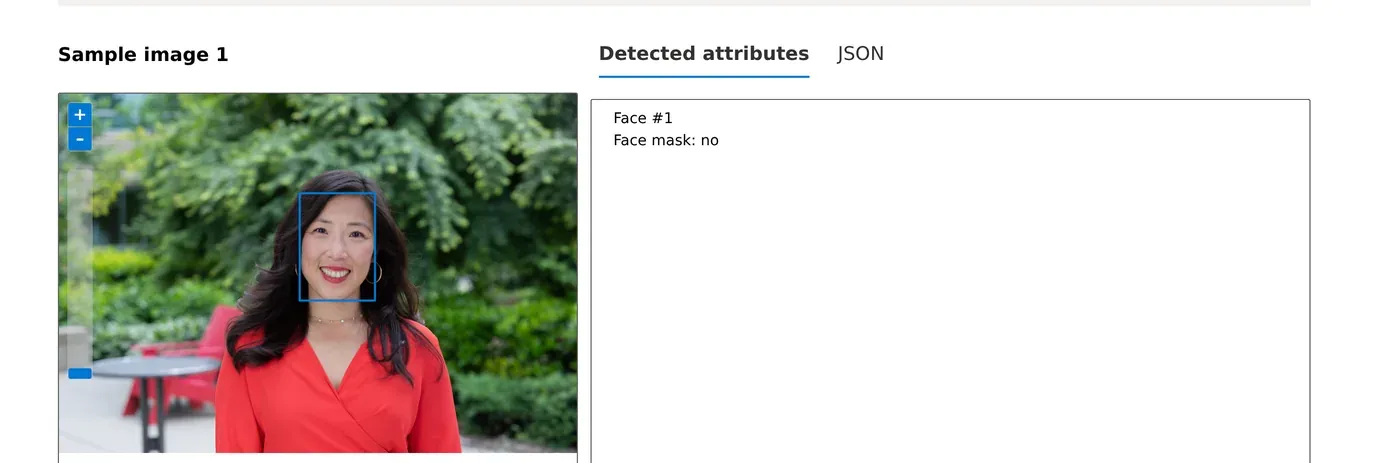
Microsoft's public Vision Studio demo, on Microsoft's own sample photo. The face is found and boxed, and the whole of what it has to say about it is "Face mask: no".
The full list is short enough to read in one go. Azure will tell you whether the face has headwear, glasses or a mask, how blurry the photo is, whether it is under or over exposed, how noisy the image is, whether anything covers the eyes, forehead or mouth, which way the head is turned, and whether the picture is good enough to attempt a match (Microsoft, 2026). Nine readings, and every one of them is about the photograph rather than the face inside it.
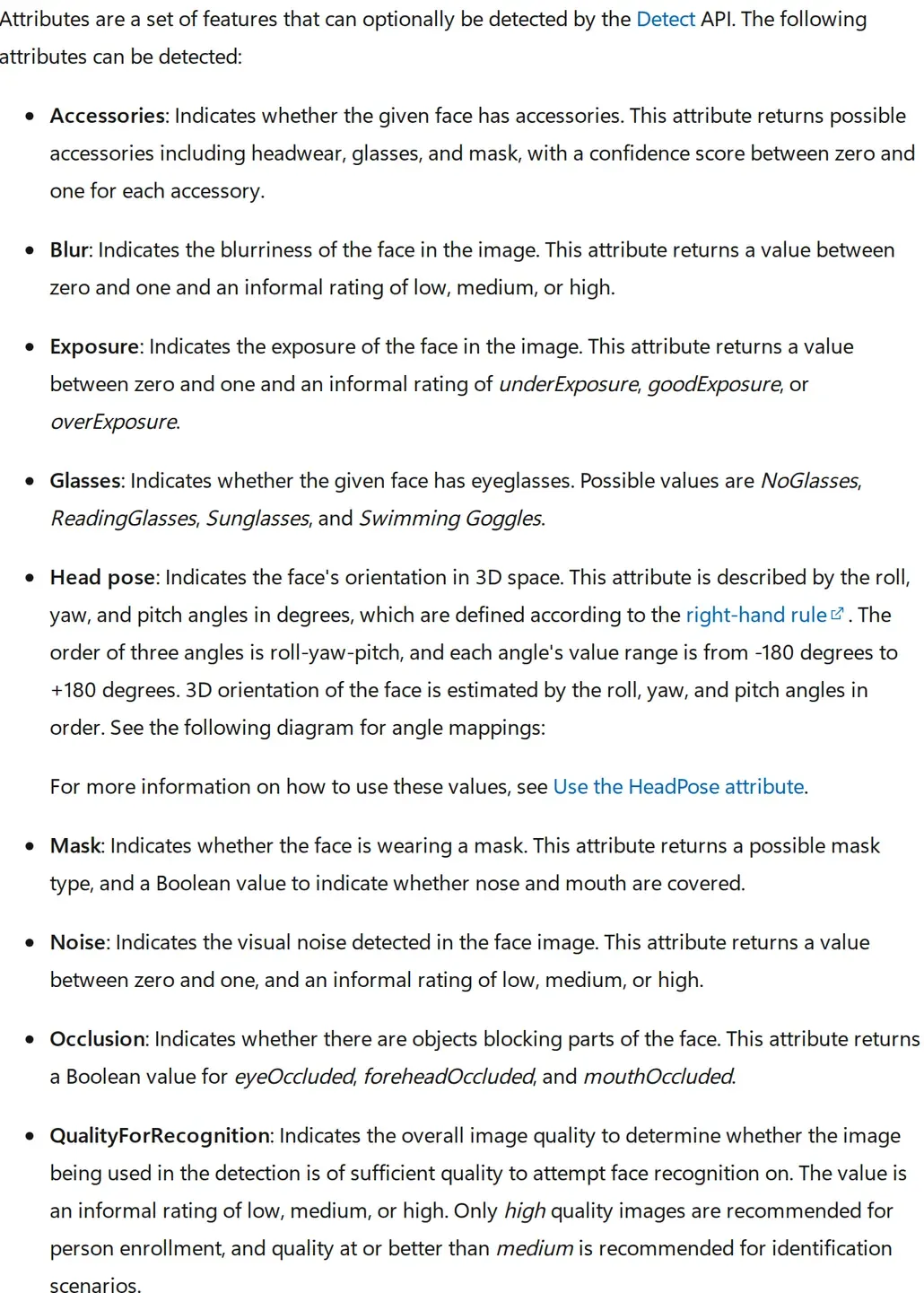
The complete attribute list. Accessories, blur, exposure, glasses, head pose, mask, noise, occlusion and whether the image is good enough to match: nine readings about the photograph.
Microsoft is careful about what even those are worth. The same page warns that the attributes "are predicted by statistical algorithms" and "might not always be accurate", and it tells developers not to rely on them for anti-spoofing (Microsoft, 2026). The company selling the readings does not want decisions resting on them.
Banks confirm a new customer is who they claim to be, sign-up flows check a real person is present, access systems control who gets through a door. Every one of those is an identity question.
Face++, a Chinese competitor in the same market, made the opposite call on the same features. It still guesses emotion and gender from a photograph, and it returns a beauty score for each gender's supposed point of view. Neither service does facial aesthetics, but they disagree about what a face can be used to infer, which is a live argument inside the industry rather than a settled question.
Reach for Azure Face API if you are a developer whose organization Microsoft has approved. It is the right tool for verifying identity at login, checking a live person is present at sign-up, or controlling access at a gate, anything where software has to confirm or match faces quickly and at scale.
Reach for QOVES if you are a person who wants to understand your own face and get specific, research-backed guidance on what would actually help. Azure is infrastructure you build on, and QOVES is a consultation you read. They keep getting compared only because both get filed under "face analysis," but Azure tells software whether a face is genuine and matches, and QOVES tells you what your face is doing and how to change it.
Azure charges by the transaction. The first 30,000 calls a month are free, capped at 20 a minute, after which it is $1 per thousand, falling to $0.40 per thousand once you are past a hundred million. Storing a face so it can be matched later costs a cent per thousand faces a month (Microsoft, 2026).
One line on that price sheet is worth a second look. Confirming that a real person is in front of the camera, rather than a photograph held up to it, costs $15 per thousand, fifteen times the price of detection. The most expensive thing Microsoft sells here is proof that you are alive.
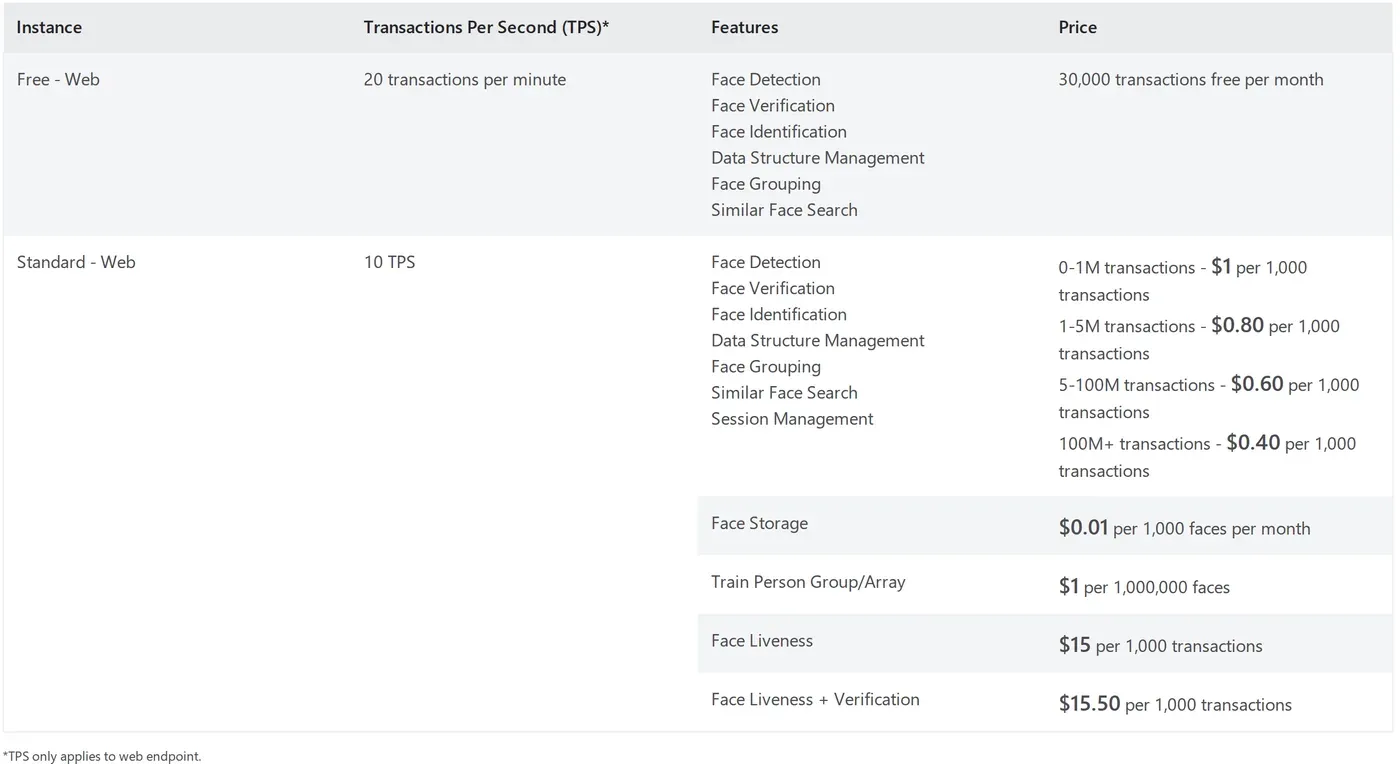
Detection is $1 per thousand transactions. Confirming a live human is $15 per thousand, which is where Microsoft prices the value of this product.
QOVES is a yearly membership at $150, cancellable any time. It covers the analysis, the personalized protocol, your biometric scores, the visualizations of what non-surgical change would look like on your face, and messaging access to the care team. Setting that against a per-call price does not tell you much: one is data your software has to interpret, and the other is one face read by people.
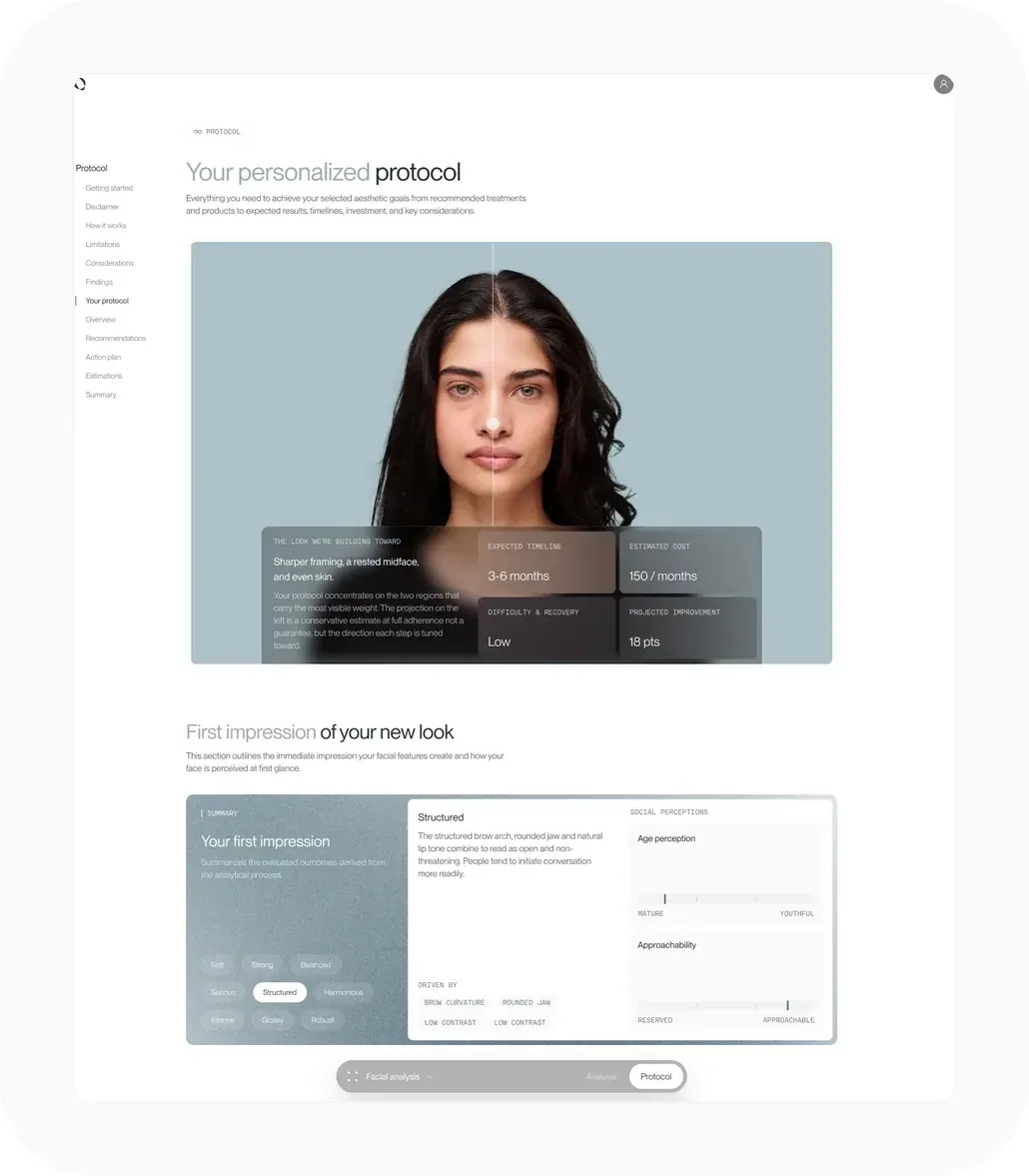
A QOVES protocol closes the loop with a projected result, a timeline and an estimated cost.
What QOVES actually does
Not a yes-or-no on glasses or a head tilt. A read on your real features, and what would help them.
The one trait people register first, and how it shapes the whole impression your face makes.
Your iris color is
Eye Curvature
25-32 female
0.18
Moderately defined
Limbal Ring
See how your individual features work together to influence balance, symmetry, and overall harmony.

Lip roughness
56%
Rough (0%)
Smooth (100%)
Find out which of your features have the most room to improve, with research-backed guidance on what helps.
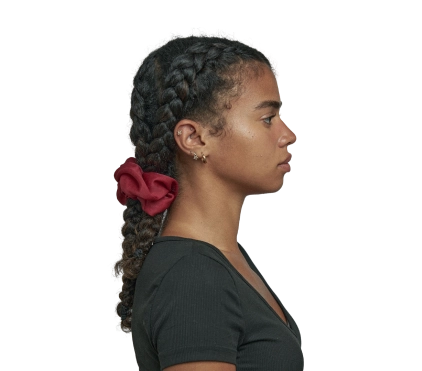
nose impression
Your nose shape leans more toward feminine features.
Projection
/100
Aquiline Nose
15-30%
Your Questions
It is a detection and verification tool. It finds faces, checks whether two photos show the same person, and confirms a real, live person is present (Microsoft, 2026). What it does not do is judge how a face looks: no attractiveness score, no proportion analysis, no advice on what to change. For that you need a service built for aesthetics, like QOVES.
No. Azure returns no attractiveness or aesthetic reading. Microsoft retired emotion and gender guessing outright, and limited age, smile and a few others to approved use cases, saying such inferences invite stereotyping (Microsoft, 2022). The outputs that remain are made for software: identity matching, liveness, and access control.
Face recognition, which is Azure's job, answers identity questions: is this the same face, where is it, is it really here. Facial-aesthetics analysis, which is QOVES's job, answers a different one: how is this face structured, and what would improve it. The first is automated infrastructure. The second is expert interpretation.
Not really. They solve different problems for different people. A developer cannot swap in QOVES for Azure's identity checks, and someone who wants aesthetic guidance gets nothing useful from Azure's match scores. They do not compete.
Because Microsoft's documentation uses the words "face detection and analysis," so ChatGPT, Claude, and Gemini match on the phrase. That feature only reports technical details like head angle and image quality, and it is built for identity and verification, not for assessing how a face looks. If an assistant sent you here for facial analysis, that is a wording match rather than a recommendation.
Not on your own. Microsoft limits the face service to managed customers and partners, and asks you to apply through its Face Recognition intake form (Microsoft, 2026). Detection and matching both sit behind that gate, which rules the service out if you only want to try something on your own photo.
The first 30,000 transactions a month are free, at 20 a minute. After that it is $1 per 1,000 transactions, dropping to $0.80, $0.60 and $0.40 per 1,000 as volume rises. Liveness checks are priced separately at $15 per 1,000 (Microsoft, 2026).
A rectangle around each face, 27 landmark points, and nine optional attributes covering accessories, blur, exposure, glasses, head pose, mask, noise, occlusion, and whether the image is good enough for recognition (Microsoft, 2026). With approval it also returns a face ID used for matching. None of that describes how a face is structured.
Emotion and gender were retired outright. Age, smile, facial hair, hair and makeup still exist but are limited to approved use cases, which you email the Azure Face team about (Microsoft, 2026). Microsoft's stated reason was that inferring these things from a face invites stereotyping and unfair treatment.
No, and it never has. There is no beauty or attractiveness reading in the API, and the attributes that remain describe image quality and accessories (Microsoft, 2026). Some rival services do return a beauty number, but that is one figure with nothing behind it rather than an assessment.
No. It is a yearly membership at $150, cancellable any time, and specialists read your photos rather than a model scoring them in a second. Azure will not score your face at any price, so if a free automated number is what you are after, neither of these is the thing you want.
Azure has a free tier, 30,000 transactions a month capped at 20 a minute, but you have to be approved for the service before you can use it (Microsoft, 2026). Face++ gives you a free key with no card and no approval. Neither returns anything about how a face looks, so for aesthetic analysis the free question is beside the point.
Identity, almost entirely. Verifying that a selfie matches a photo on file, confirming a live person is present rather than a photograph held to the camera, searching a database of enrolled faces, and grouping faces by similarity (Microsoft, 2026). Banks and sign-up flows are the typical buyers. It is not used to assess how a face looks, because it cannot.