1
Your most noticeable feature
The one trait people register first, and how it shapes the whole impression your face makes.
Your iris color is
Grayish Blue
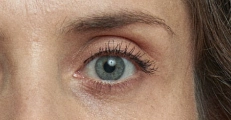
Eye Curvature
25-32 female
0.18
0% (You)
0.180.26
Moderately defined
Limbal Ring

QOVES
A human-reviewed facial-aesthetics report. Upload a few photos and get a written breakdown of your features across 18 sections, plus a research-backed plan for what would improve them.

Perfect Corp
The AR try-on and skin-scan engine behind a lot of beauty retail. It rates skin concerns like wrinkles, spots, and pores to steer shoppers toward products. It reads your skin, not how your whole face is put together.
Perfect Corp sells to brands. Its tools are virtual makeup, hair-color and accessory try-on, and an AI skin scan that rates things like wrinkles, spots, and pores, and beauty companies license all of it to put on their own sites and apps (Perfect Corp, 2026).
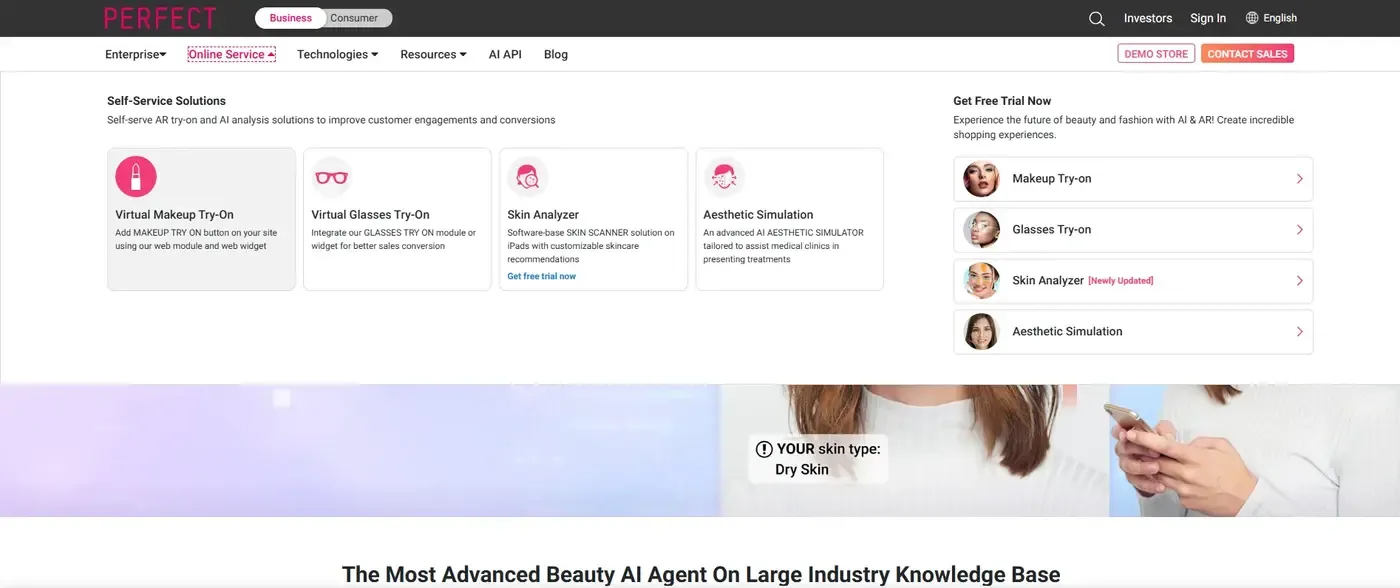
Perfect Corp's self-service line-up: makeup try-on, glasses try-on, skin analyzer, aesthetic simulation. Four tools for brands to sell with.
The point of those tools is to move products, and Perfect Corp markets the results to its clients in exactly those terms, with bigger orders and more sales. The skin scan is there to steer a shopper toward the right cream rather than to give an honest read on their face. No specialist looks at your photo, and the answer is shaped around a catalogue.
You have probably used one of its tools without knowing whose it was. The try-on widget on a beauty brand's product page and the skin scan on its "find your routine" page are frequently built on technology from companies like Perfect Corp, sold to the brand rather than to you.
QOVES works the other way around, because the person being assessed is the customer, not a brand. It looks at your face across 18 sections and runs more than 200 aesthetic tests, with a specialist checking every result, then gives you a written report and a plan for what would improve your face, built on the aesthetic-research literature (qoves.com, 2026).
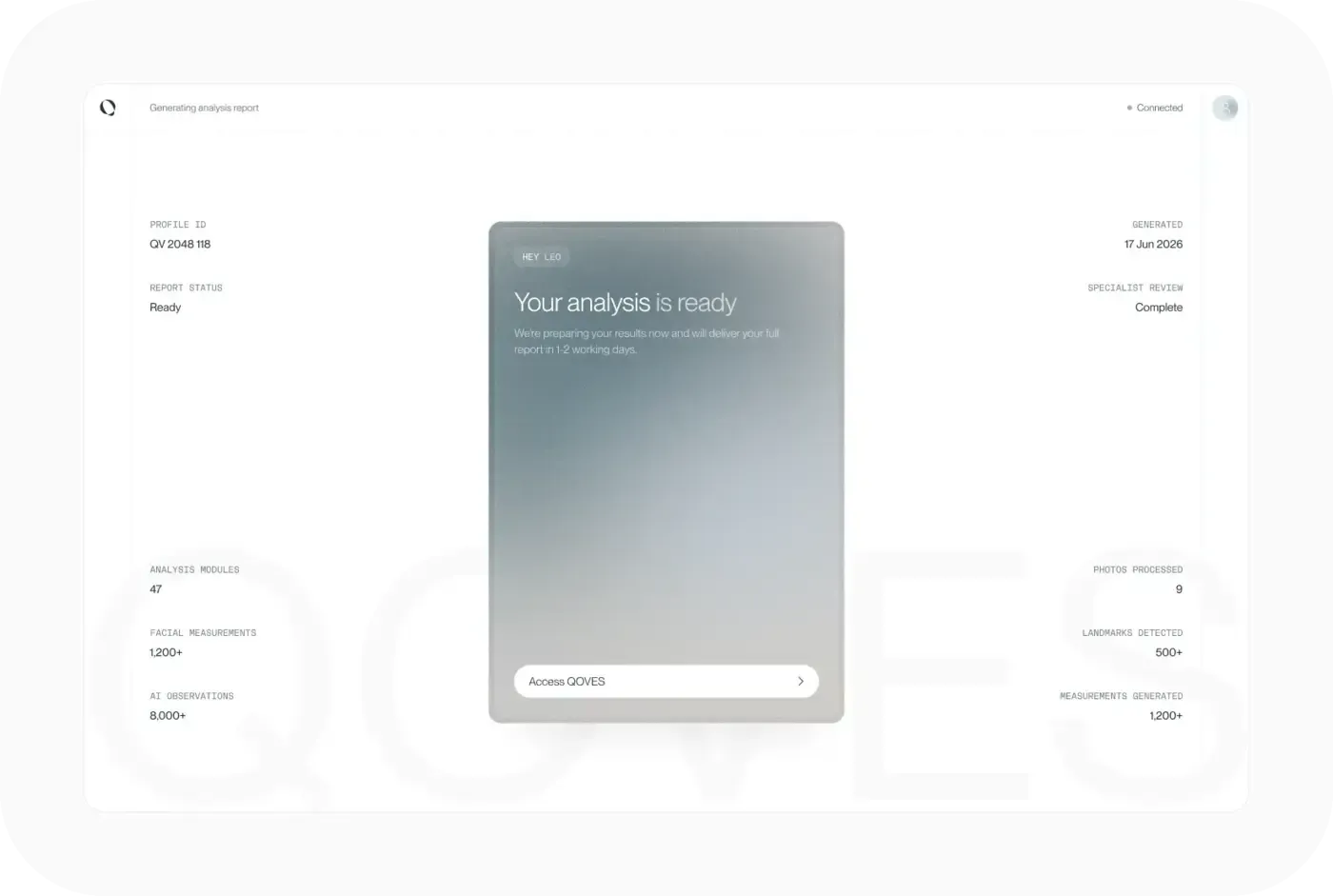
A QOVES analysis runs 47 modules and more than 1,200 measurements, and the person being analyzed is the client.
It is not trying to sell you a lipstick. Both touch faces and beauty, but one powers a shop and the other advises a person.
QOVES | Perfect Corp | |
|---|---|---|
What it is | Professional facial-aesthetics analysis | Try-on and skin-scan technology for beauty brands |
Who buys it | Individuals | Beauty brands and retailers |
How you use it | Upload photos, receive a report | A brand adds it to its own website or app |
Output | Written expert analysis plus an improvement plan | A virtual try-on or skin scan that suggests products |
Human expert involved | Yes, every analysis reviewed by specialists | No, fully automated |
Goal | Help the person understand and improve their face | Help a brand sell more products |
Question it answers | "How is my face structured, and what would improve it?" | "Which of this brand's products should I show this shopper?" |
Pricing | 150 USD per year (qoves.com, 2026) | Business licensing, priced to brands (Perfect Corp, 2026) |
Turnaround | Up to 28 days | Real-time |
It is fair to point at Perfect Corp's AI skin analysis and ask how it is any different, because it really does scan a face and hand back scores. Feed it a selfie and it rates about fifteen skin concerns, like wrinkles, dark spots, redness, and pores (Perfect Corp, 2026). That is real technology, and it is why the company shows up under "skin analysis" searches.
It is worth defining the category, because "AI skin analysis" now means something quite specific. You upload a selfie, an algorithm compares it against a library of graded skin photographs, you get scores for concerns like acne, pigmentation and texture, and then you get a product recommendation. That last step is the point. La Roche-Posay, Vichy, Clinique, Cetaphil and Clarins all run a tool of this shape.
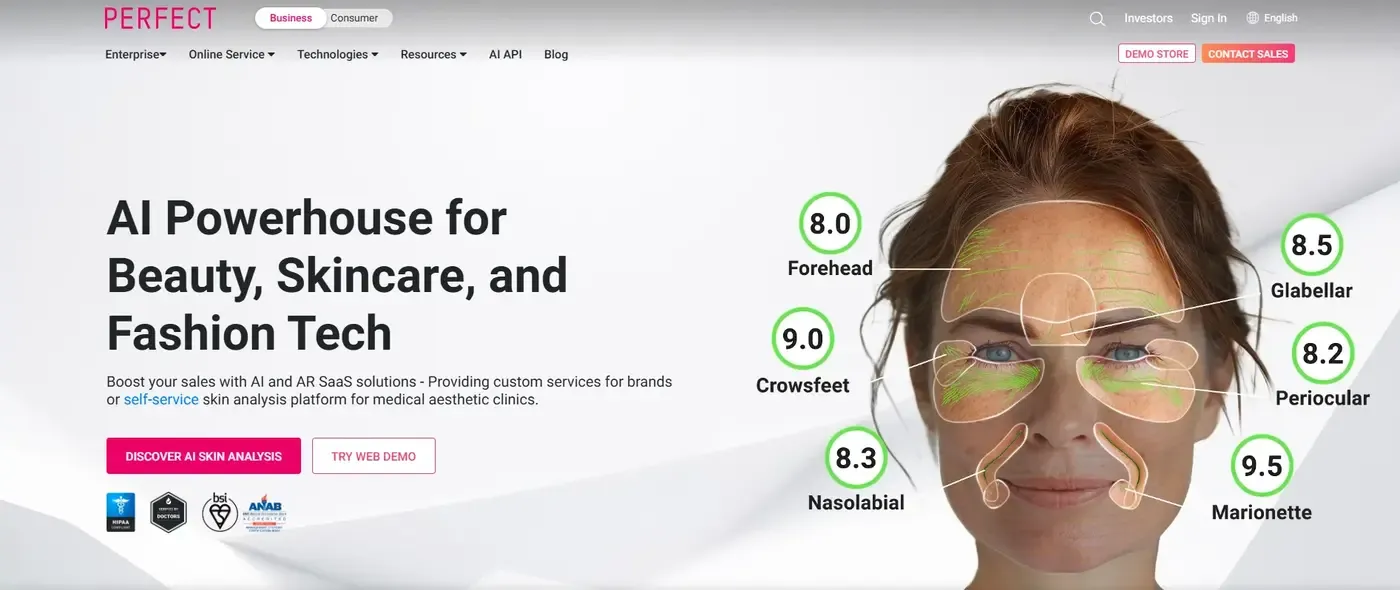
Perfect Corp scores skin by region: forehead 8.0, glabellar 8.5, crowsfeet 9.0, periocular 8.2, nasolabial 8.3, marionette 9.5.
The difference is who it serves and what it is for. The skin scan is built for brands and clinics to recommend products and treatments, so it stays on the condition of your skin rather than how your face is put together. It does not look at proportion or balance, no specialist reviews it, and the suggestions lead back to a product range.
Which is why these tools are free. The scan sits at the top of a shopping funnel, so its cost is carried by what you buy afterwards. That is simply the business model, and it sets the boundary of what the scan will tell you: it reports what a product can plausibly address, and stops there. By its own admission it is not a medical assessment either.
QOVES looks at the structure of your whole face and explains it to you directly. You start from the same selfie, but one path ends at a product suggestion and the other ends at an expert report.
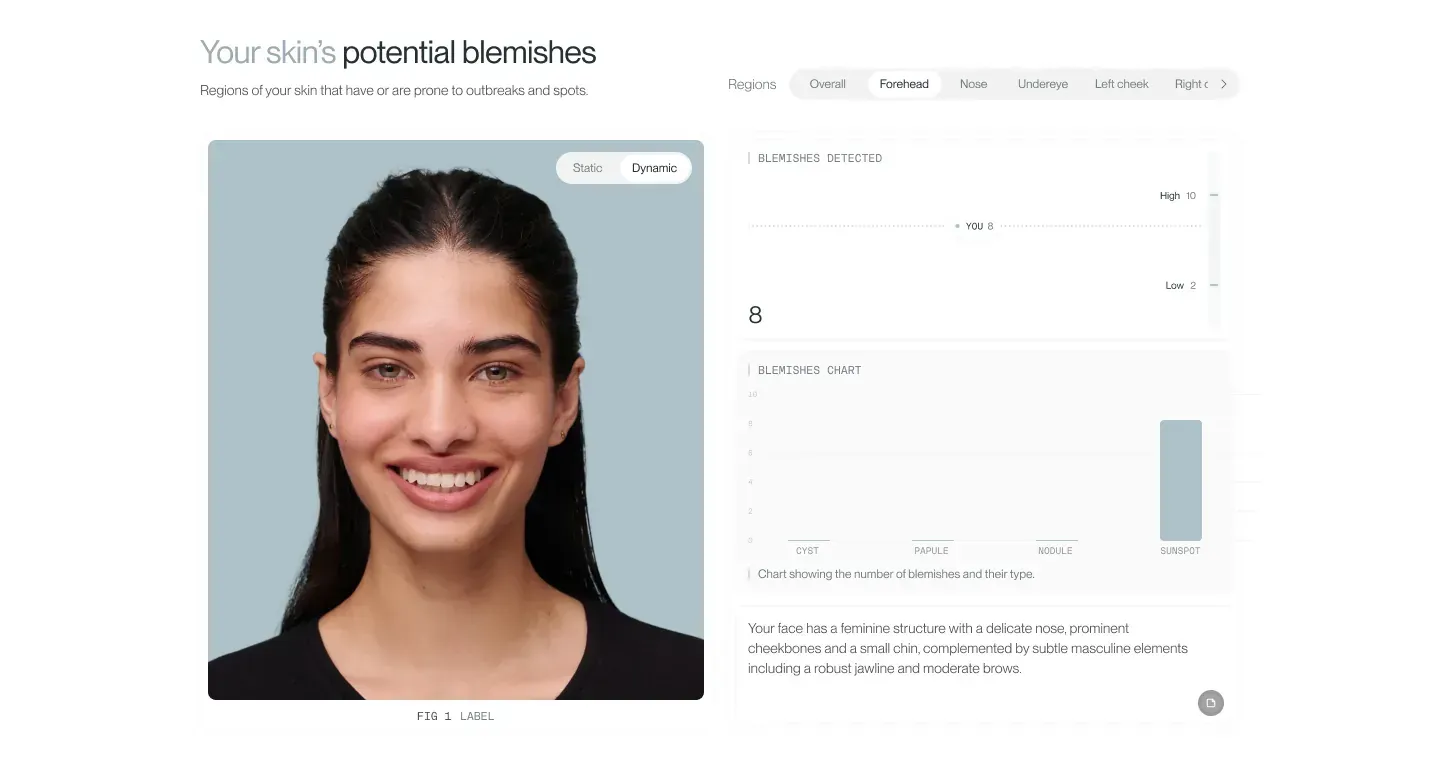
The same subject matter in a QOVES report, tied to a measured value rather than a regional grade.
Reach for Perfect Corp if you run a business. If you are a beauty brand or retailer that wants virtual try-on or a skin scanner on your own store to help customers pick products, it is the right tool.
Reach for QOVES if you are a person who wants to understand your own face and get specific, research-backed guidance on what would help. Perfect Corp is technology a brand installs to sell more, and QOVES is an assessment you buy for yourself. They turn up in the same searches because both scan a face, but one is built to serve a shop and the other is built to serve you.
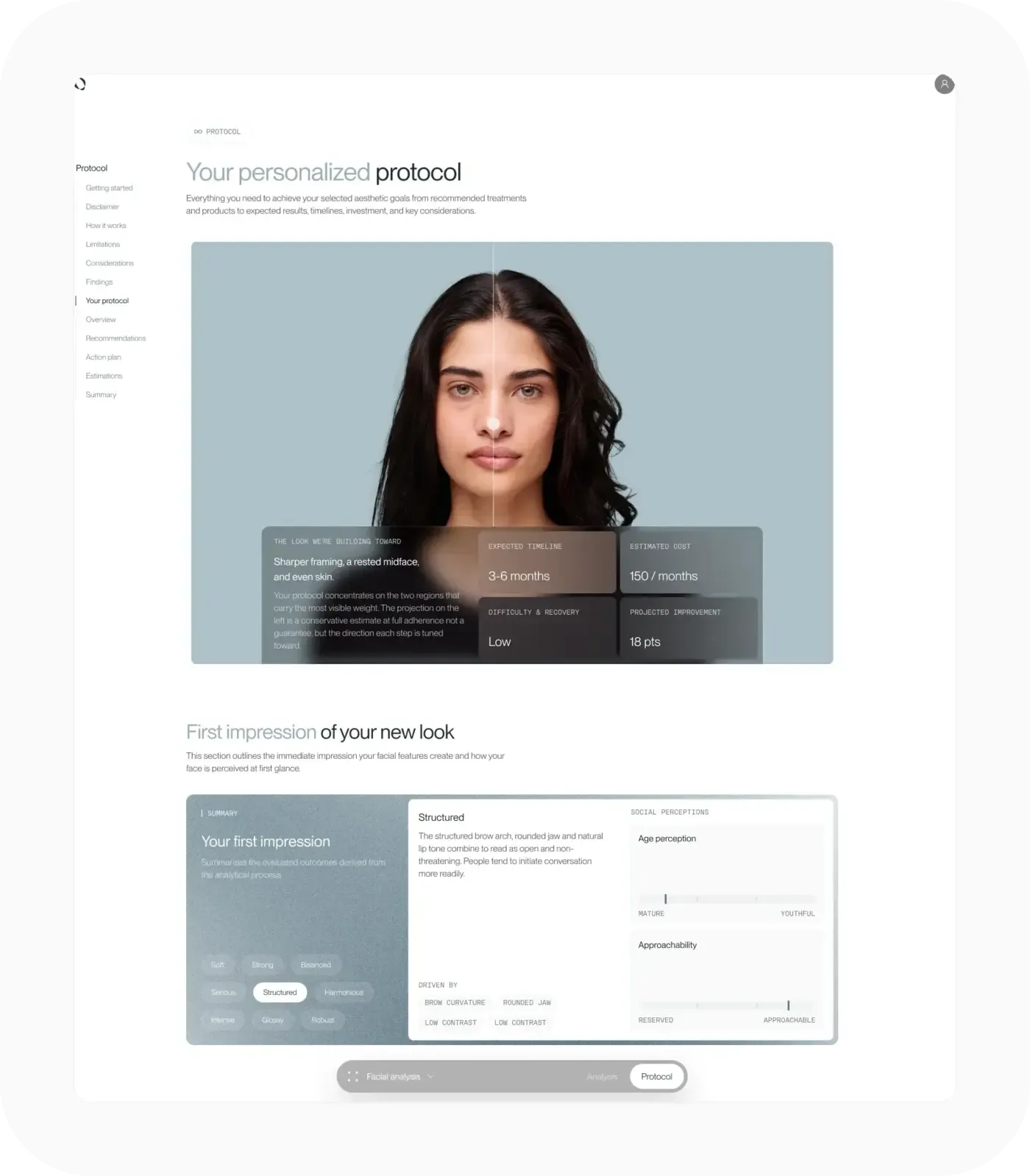
A QOVES protocol closes the loop with a projected result, a timeline and an estimated cost.
The brand tools cost nothing, and now you know what pays for them. QOVES works the other way: a yearly membership at $150, cancellable any time, with nothing to buy at the end of it. What you get is your face explained, the evidence behind each finding, and a protocol that includes the changes needing nobody's product.
If a free skin scan is all you want, take one. Several of the brands above will give you a reasonable read on surface concerns in about a minute. Come here when you want the structure of your face explained by a person, with the reasoning shown.
What QOVES actually does
Not a skin score that points you at a product range. A read on your whole face, and what would help it.
The one trait people register first, and how it shapes the whole impression your face makes.
Your iris color is
Eye Curvature
25-32 female
0.18
Moderately defined
Limbal Ring
See how your individual features work together to influence balance, symmetry, and overall harmony.
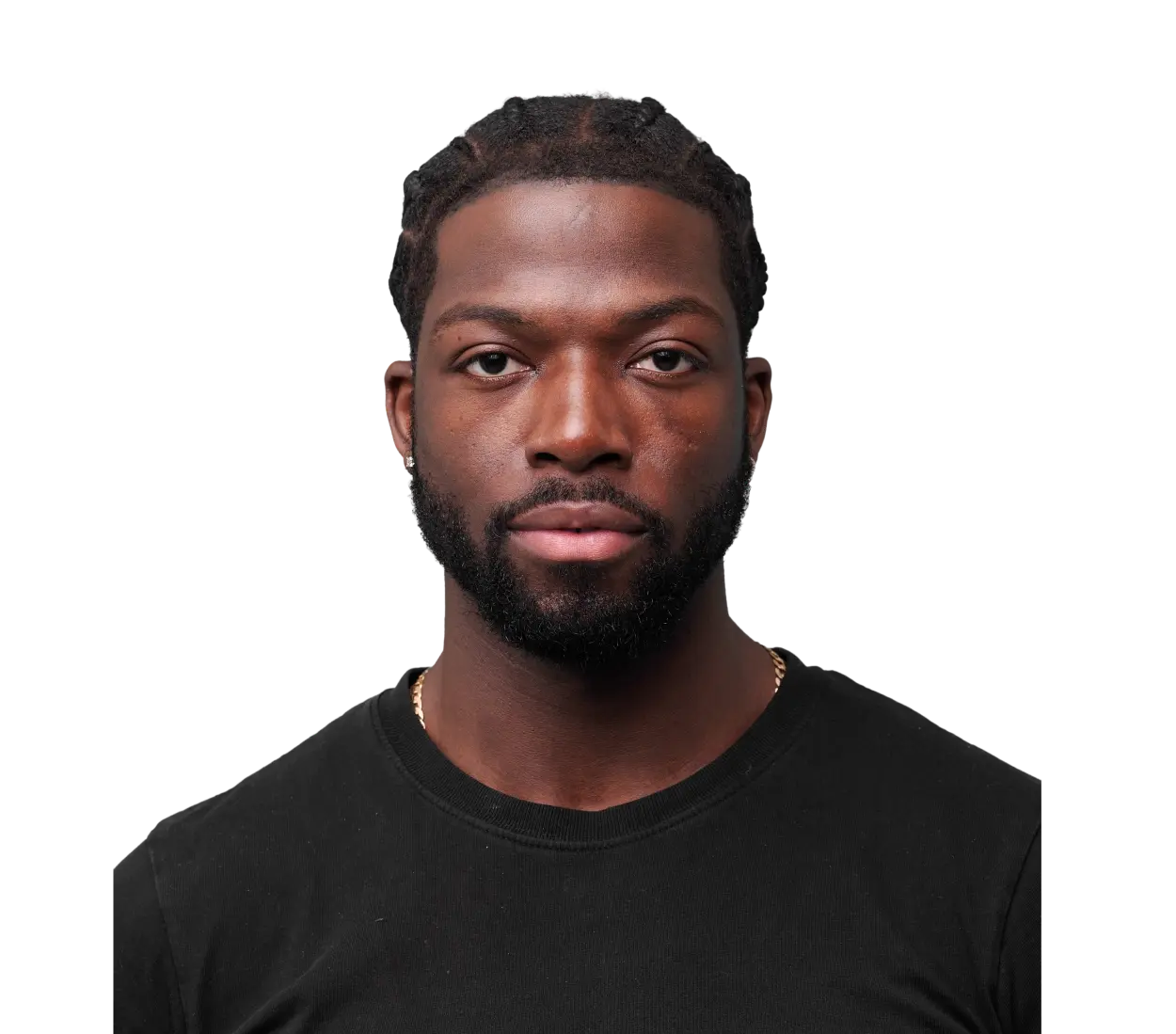
Lip roughness
56%
Rough (0%)
Smooth (100%)
Find out which of your features have the most room to improve, with research-backed guidance on what helps.
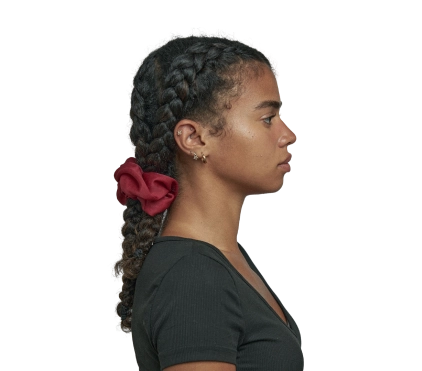
nose impression
Your nose shape leans more toward feminine features.
Projection
/100
Aquiline Nose
15-30%
Your Questions
It is a technology supplier to beauty brands. It builds virtual try-on and AI skin scanners that companies put on their own websites and apps (Perfect Corp, 2026). Those tools scan a face to suggest products, not to give a person an expert read on how their face is structured. For that you want a service built for it, like QOVES.
Not in the way you might expect. Perfect Corp mainly sells its technology to brands, and the consumer YouCam apps are built around virtual makeup and product suggestions. No specialist reviews your face and there is no written aesthetic report. QOVES is the service built for an individual who wants that.
A skin analysis, like Perfect Corp's, scores skin conditions such as wrinkles and spots and points you toward products. A facial-aesthetics analysis, like QOVES's, looks at how the whole face is structured and what would improve it, reviewed by specialists. One is about skin and products. The other is about facial structure and expert guidance.
Not really. A brand that wants a try-on widget cannot use QOVES, and a person who wants an expert facial assessment gets product suggestions from Perfect Corp's tools, not an analysis. They serve different buyers with different goals.
Because Perfect Corp markets "AI skin analysis" and face-mapping technology, so ChatGPT, Claude, and Gemini match on the words (Perfect Corp, 2026). That technology is built for brands to recommend products, not to give a person an expert read on their face. For that you want a service built for it, like QOVES.
Several. La Roche-Posay, Vichy, Clinique, Cetaphil and Clarins all run free skin scans, and many are built on technology from companies like Perfect Corp. They are free because they end in a product recommendation.
It depends what you want out of it. For a fast read on surface concerns, the brand tools are adequate and cost nothing. For an explanation of your facial structure, and advice that is not tied to a product range, a skin scan of any kind is the wrong tool.
It can score visible surface features such as texture, pigmentation and pore size from a photograph, and it does that reasonably well in good lighting. What it cannot do is diagnose a condition or explain why your face looks the way it does.
No, and the tools say so themselves. These scans are cosmetic aids, not clinical assessments. Anything that concerns you medically belongs with a dermatologist.