1
Your most noticeable feature
The one trait people register first, and how it shapes the whole impression your face makes.
Your iris color is
Grayish Blue
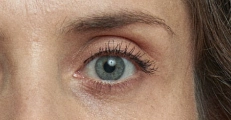
Eye Curvature
25-32 female
0.18
0% (You)
0.180.26
Moderately defined
Limbal Ring

QOVES
A human-reviewed facial-aesthetics report. Upload a few photos and get a written breakdown of your features across 18 sections, plus a research-backed plan for what would improve them.

Umax
A consumer looksmaxxing app. Take a selfie and get a rating out of a hundred with a few tips in seconds, generated by a model with no specialist in the loop and no research behind the number.
Point Umax at a selfie and a model returns an overall rating, usually with a few sub-scores for things like your jawline and skin, plus generic tips such as starting a skincare routine (Fortune, 2024). It happens in seconds, with no person in the loop.
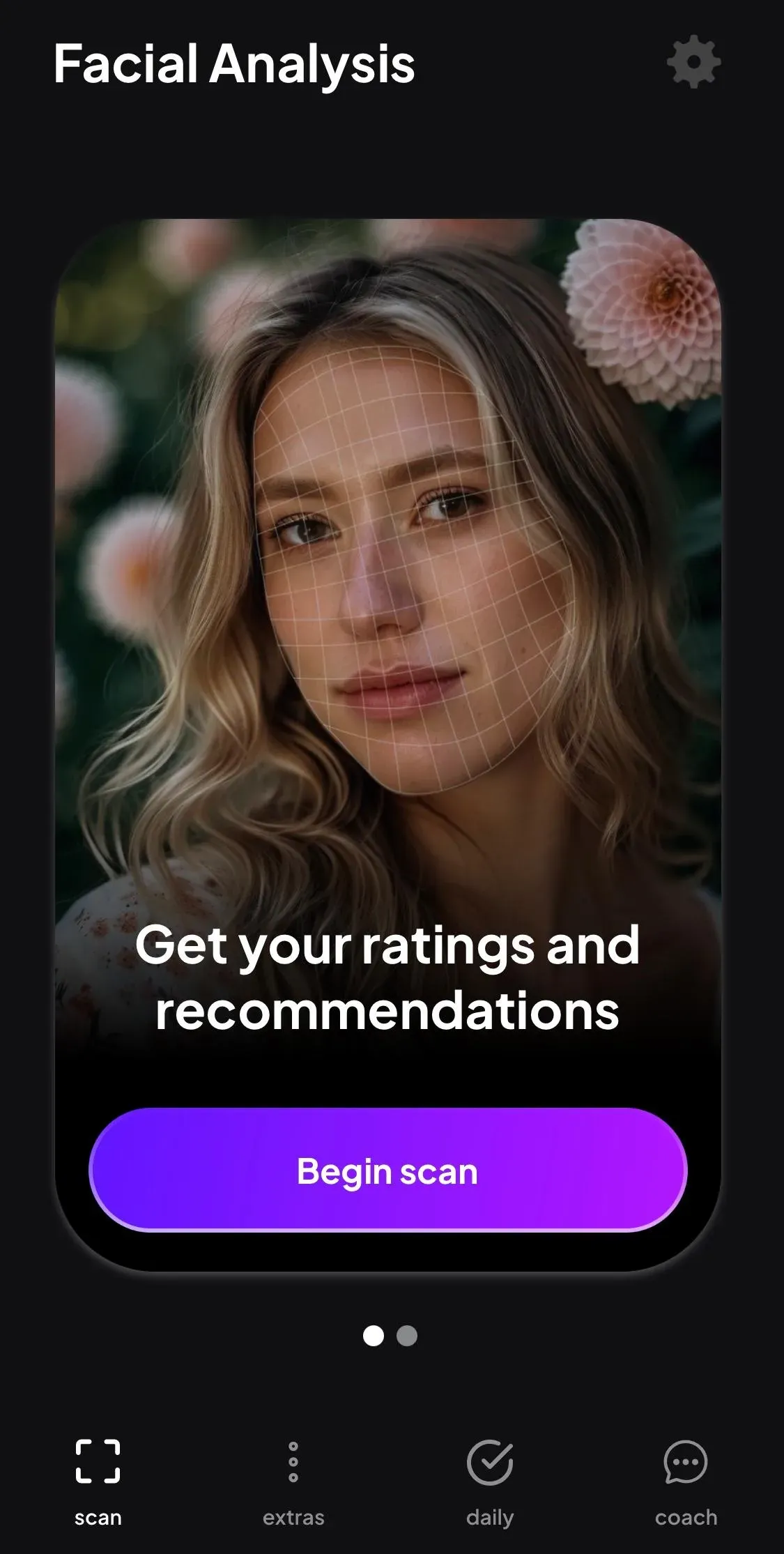
What Umax offers on opening: one selfie, then ratings and recommendations.
The trouble is that an automated selfie score drifts with lighting, angle, and filters, and there is no published evidence that these single numbers measure anything reliable (The Conversation, 2026). You get a verdict without the reasoning, and the verdict is shakier than it looks.
It is not only us saying so. Australia's eSafety Commissioner lists Umax in its guide to apps parents should know about, describing it as an app marketed to men that scores facial features "according to its own parameters of attractiveness". That last phrase is the whole problem: the parameters belong to the app, and the app does not publish them.
QOVES is built to do the opposite. Specialists work through 18 sections of your face and more than 200 aesthetic tests, then write you a report that explains what they found and lays out a plan, grounded in the aesthetic research (qoves.com, 2026). It takes up to 28 days rather than seconds, because a real person is reading your face.
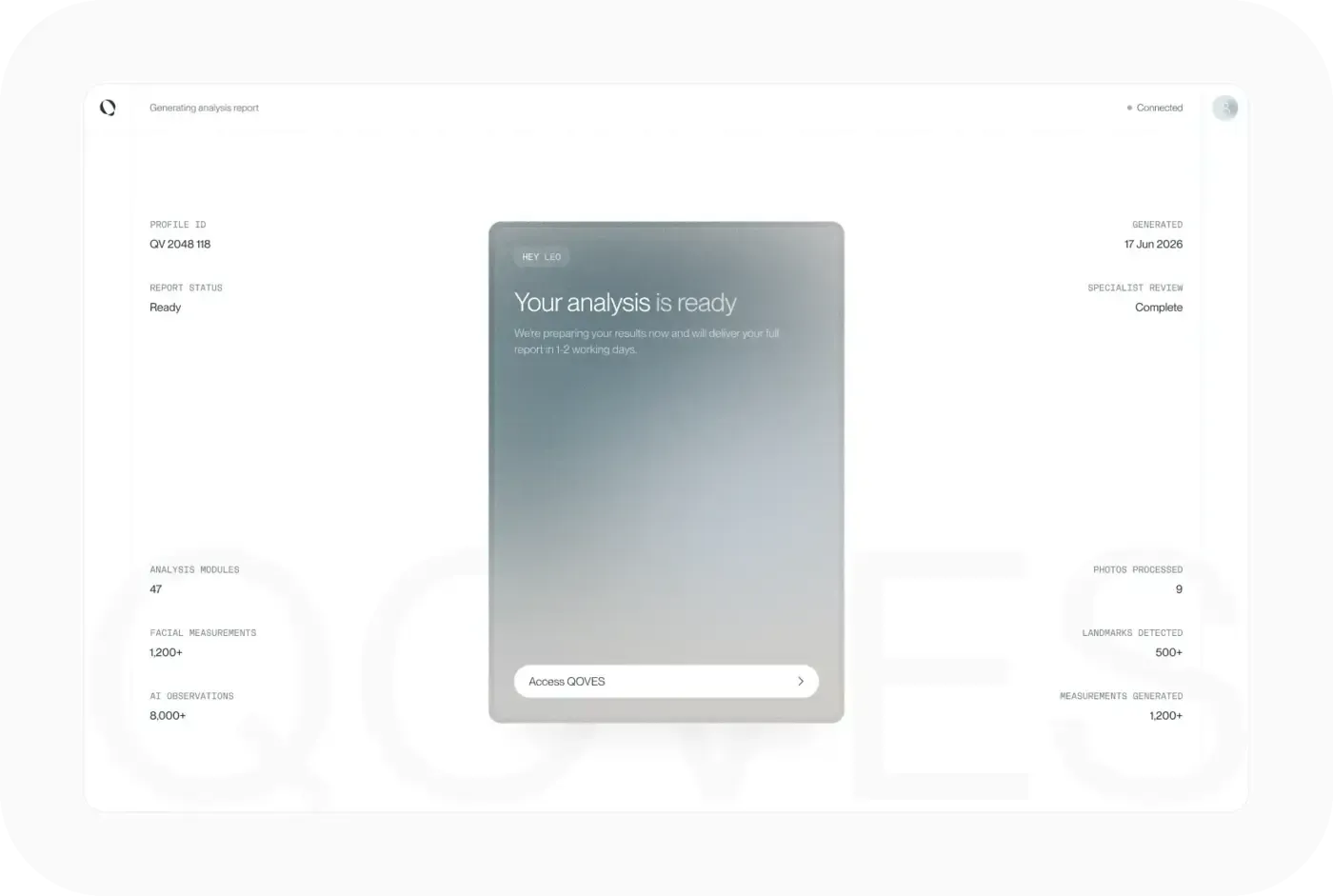
A QOVES analysis runs 47 modules and more than 1,200 measurements across nine photos.
Same selfie, very different answers: Umax hands you a number, while QOVES explains your face and shows you what could change.
QOVES | Umax | |
|---|---|---|
What it is | Professional facial-aesthetics analysis | Automated face-rating app |
Built for | People who want an expert read | Anyone who wants an instant score |
How you use it | Upload photos, receive a report | Take a selfie in the app |
Output | Written expert analysis plus an improvement plan | A score and a few automated tips |
Human expert involved | Yes, every analysis reviewed by specialists | No, fully automated |
Depth | 18 facial sections, more than 200 tests | A single rating with sub-scores |
Question it answers | "How is my face structured, and what would improve it?" | "What is my score?" |
Pricing | 150 USD per year (qoves.com, 2026) | About 4 USD per week (Apple App Store, 2026) |
Turnaround | Up to 28 days | Seconds |
Umax does not just show one number. The newer versions break the score into a "PSL" rating, jawline measurements, skin quality, and a "potential" figure, so on screen it reads like a real analysis (Apple App Store, 2026).
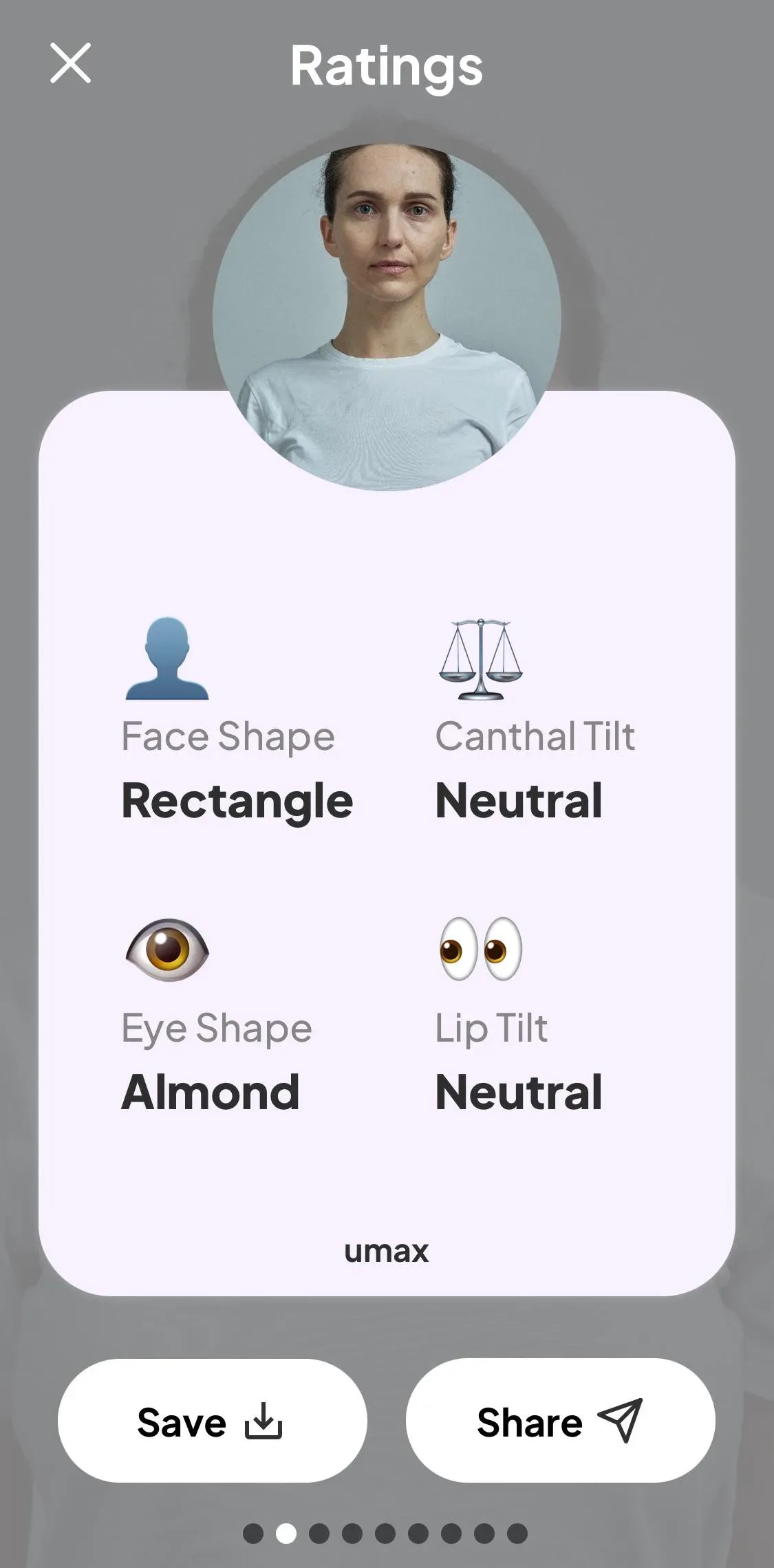
Face Shape Rectangle, Canthal Tilt Neutral, Eye Shape Almond, Lip Tilt Neutral. Every structural trait resolves to one word with no measurement behind it.
All of it is generated automatically from one selfie, with no specialist checking anything. The labels borrow from online "looksmaxxing" forums, and the whole genre has drawn criticism for marketing harsh, appearance-obsessed standards to young men and teenagers (The Conversation, 2026). One psychologist described these rating apps as eroding a person's sense of self while charging them for it (Fortune, 2024).
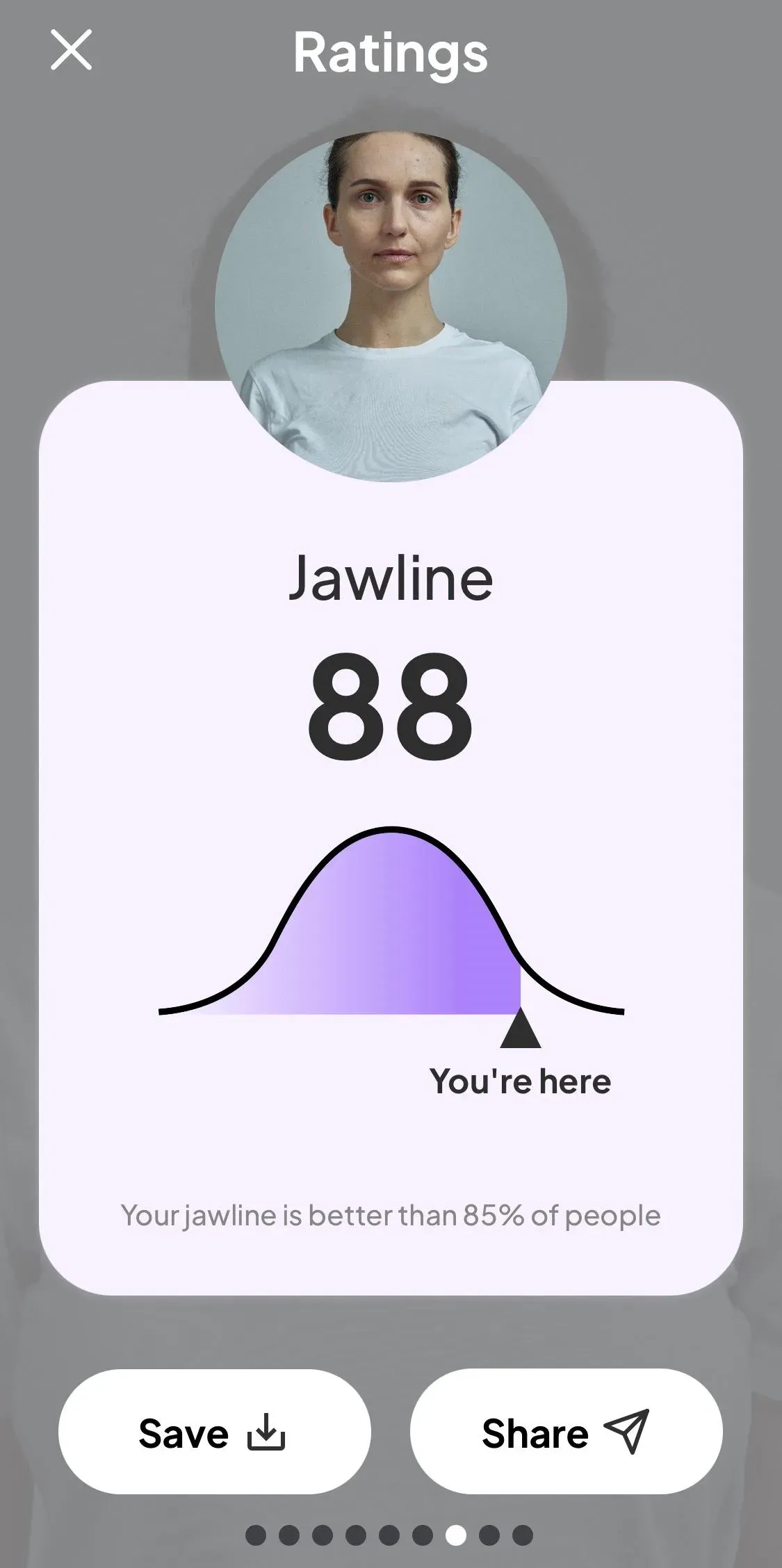
Umax puts the jawline at 88 and better than 85% of people. The reference population is never named.
Umax's own marketing has gone further than the app does. Ad copy circulated on TikTok claimed the scan is "accurate (up to 96%)", with an asterisk pointing at "clinical trials". No such trial appears in the literature, and nothing in the app names the population its percentiles are drawn from. A number can be precise to two decimal places and still be about nothing.
A detailed-looking screen is not a considered assessment. The breakdown is still a machine guessing from one photo, with no one trained reviewing it or setting it against research.
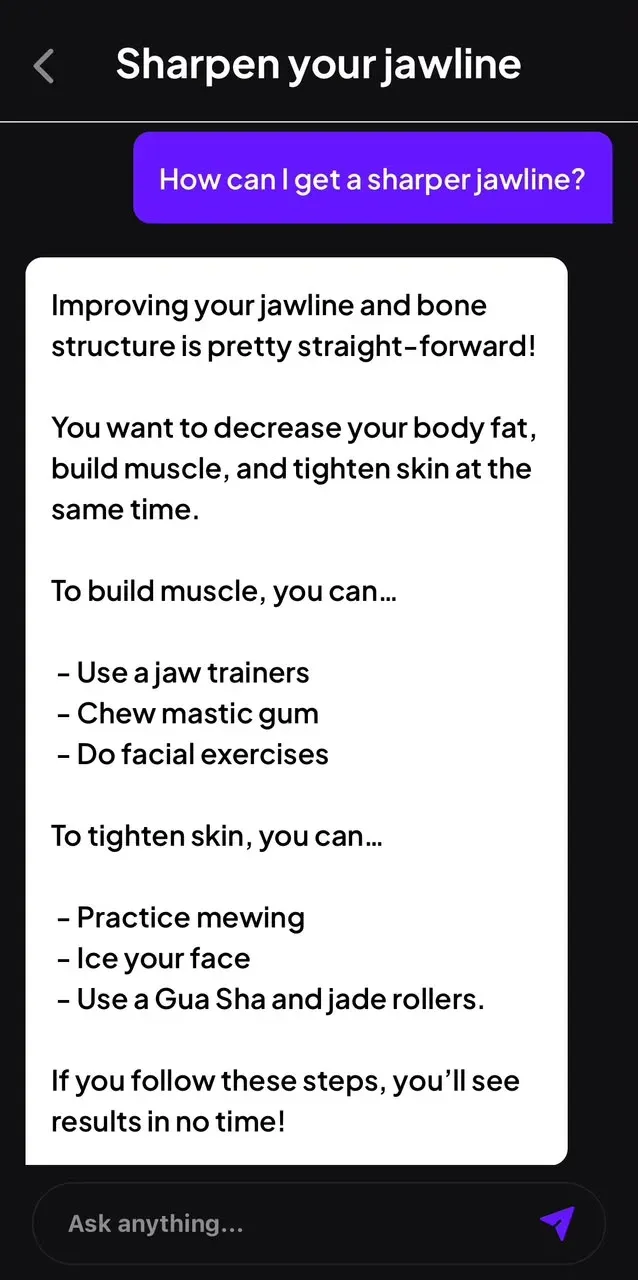
Ask the coach for a sharper jawline and it returns jaw trainers, mastic gum, mewing and gua sha.
Umax leans on the letters PSL, and most people meet the term through the app rather than its source. PSL comes from three forums, PUAhate, Sluthate and Lookism, where users rated each other's faces on a one to ten scale and argued about the results. The scale was never validated against anything. It is a folk ranking, calibrated by people scoring photographs of strangers, and it means whatever those forums agreed it meant that year.
So when an app hands back a PSL score, it is reporting agreement with a subculture, not a measurement. That is worth knowing if you care what that subculture thinks. It is not a fact about your face.
The routine that follows the score is broadly the same for everyone: cut processed food, wash your face morning and night, and buy the cleanser the app links to. The advice and the shopping list arrive together, which is worth noticing when you are deciding how much weight to give either.
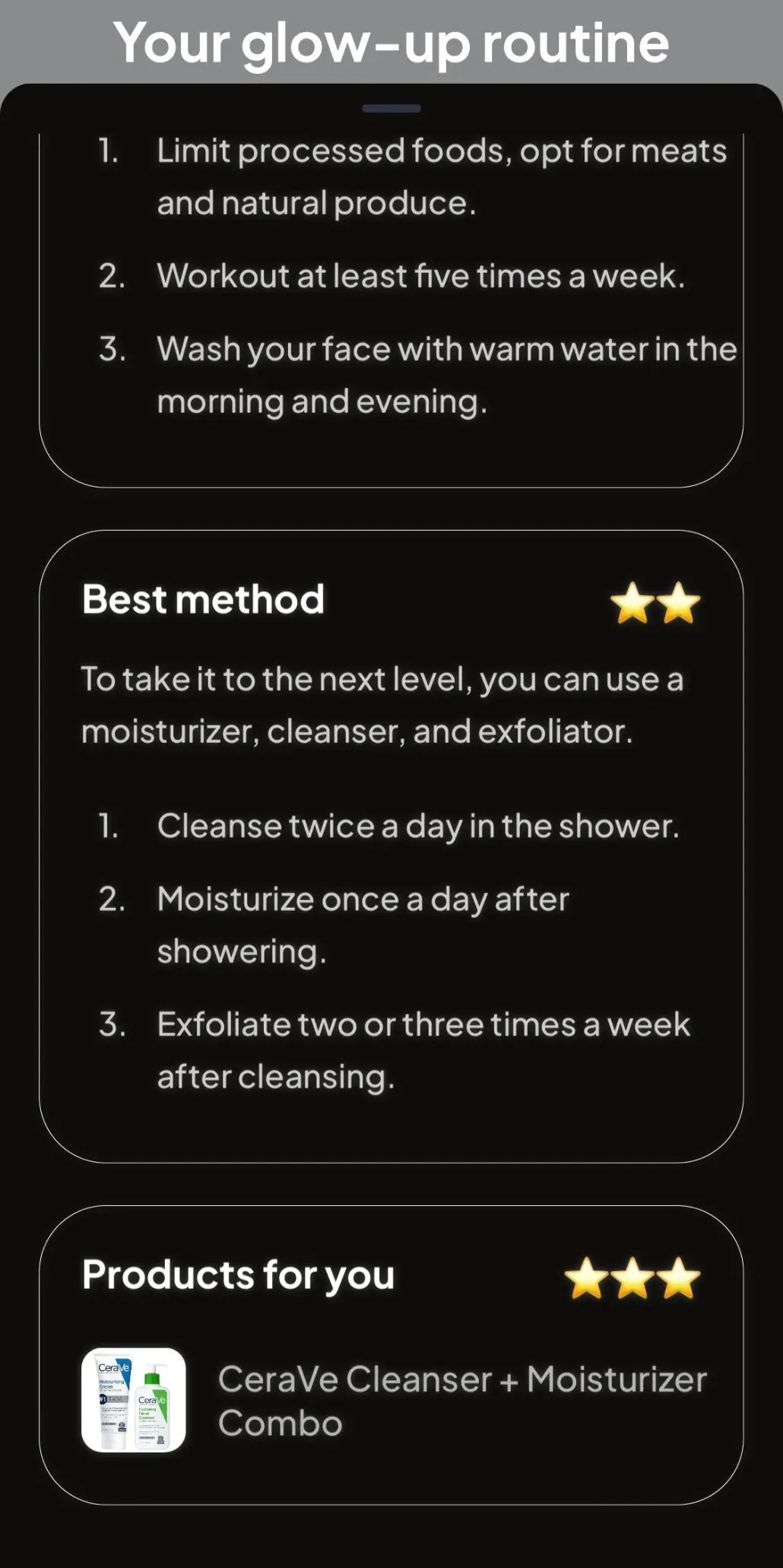
The routine every scan produces, with the product recommendation attached.
Reach for Umax if you want a quick, cheap score to react to and you are not putting much weight on it. It is instant, it costs a few dollars, and it can be a bit of fun.
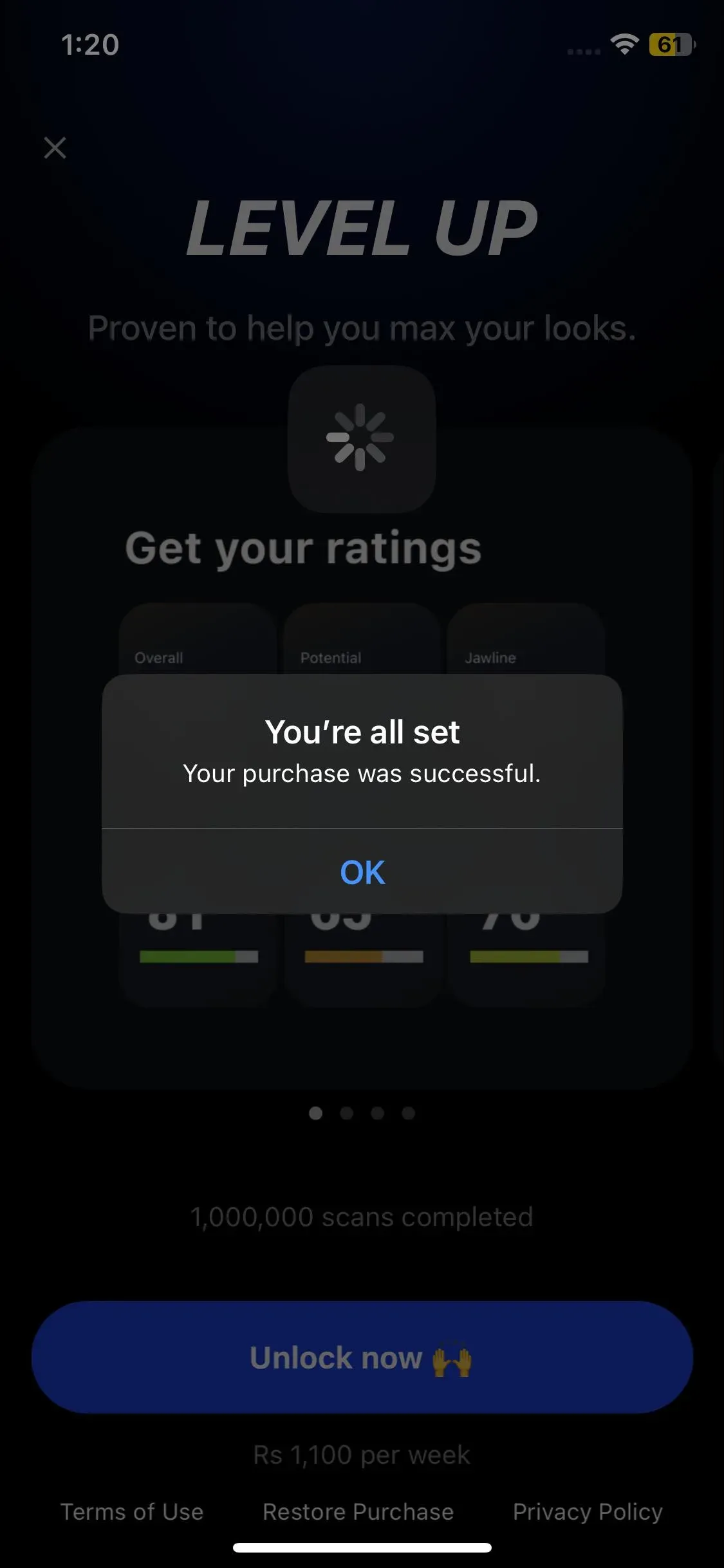
The subscription screen from our test, at Rs 1,100 per week over a claim of 1,000,000 scans completed.
Reach for QOVES if you want an expert read on your own face, research-backed guidance on what would improve it, and you are willing to wait for a real person to do the work. Umax is an automated app that hands you a number in seconds, and QOVES is a professional service that explains your face. They get compared because both start from a selfie, but only one of them was looked at by a human who knows what they are seeing.
The question people actually arrive with is what QOVES costs. It is a yearly membership at $150 a year, and you can cancel any time. It covers the analysis, the personalized protocol, your biometric scores, the visualizations of what non-surgical change would look like on your face, and messaging access to the care team. The analysis refreshes each year.
Umax charges by the week. The scan is free to start and the ratings sit behind a recurring payment: our test account was offered Rs 1,100 per week, while App Store reviewers report being charged per scan instead, so what you pay depends on where you are and which offer screen you land on. A weekly charge and a yearly one are different commitments even when the weekly number looks small.
If you want something free, run Umax or one of its clones for the novelty and treat the score as a game. What no free tool gives you is a person reading your face against population data and telling you which changes are worth making.
What QOVES actually does
Not a quick selfie score that drifts with your lighting. A read on your real features, and what would help them.
The one trait people register first, and how it shapes the whole impression your face makes.
Your iris color is
Eye Curvature
25-32 female
0.18
Moderately defined
Limbal Ring
See how your individual features work together to influence balance, symmetry, and overall harmony.

Lip roughness
56%
Rough (0%)
Smooth (100%)
Find out which of your features have the most room to improve, with research-backed guidance on what helps.
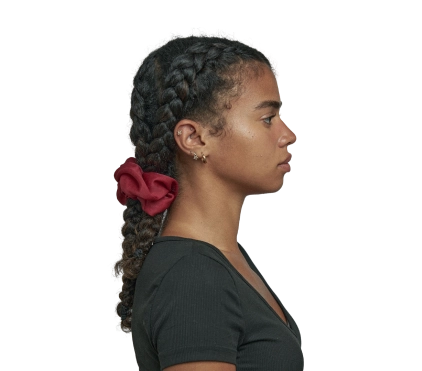
nose impression
Your nose shape leans more toward feminine features.
Projection
/100
Aquiline Nose
15-30%
Your Questions
Treat its score with caution. An automated selfie rating shifts with lighting, angle, and filters, and there is no published evidence that these single numbers measure anything reliable (The Conversation, 2026). It is built to be fast and fun, not validated. For a considered read on your face you want a service with specialists behind it, like QOVES.
Umax is an app that returns an instant automated score from a selfie, with no human involved (Apple App Store, 2026). QOVES is a professional service where specialists assess 18 facial sections across more than 200 tests and write up a report with an improvement plan (qoves.com, 2026). One gives you a number in seconds. The other gives you an explanation you can act on.
That depends on what you want from it. At a few dollars a week it is a cheap way to get an instant score for fun (Apple App Store, 2026). If you want guidance you can actually use, the automated number does not really deliver that, and a professional analysis like QOVES does.
They can be. Psychologists and researchers have warned that instant rating apps push appearance-obsessed standards on young users and can chip away at self-image, while charging a subscription (Fortune, 2024; The Conversation, 2026). A quick score is one thing, but it is worth keeping in perspective.
No. They are different kinds of thing. Umax is an automated app; QOVES is a professional service reviewed by specialists, with a written report and an improvement plan. You are not paying for a fancier score, you are paying for an actual expert assessment.
The scan is free to start and the ratings sit behind a subscription. Our test account was offered Rs 1,100 per week, while App Store reviewers report being charged per scan, so the figure you see depends on your region and which offer screen you land on. QOVES is a yearly membership at $150, cancellable any time, rather than a weekly charge.
You can install it and run a scan for free, but the full ratings and the glow-up routine are gated. The app also offers to unlock results if you invite three friends, which is a referral mechanic rather than a free tier.
There is no answer to this, and that is the useful part. Umax does not publish the population its percentiles are measured against, so a score of 86 tells you the app placed you at 86 on its own undisclosed scale. Nothing external anchors it.
A one to ten face rating scale that came out of the PUAhate, Sluthate and Lookism forums. It was never validated against measurement or population data, so a PSL score reports agreement with a subculture's taste rather than anything about your facial structure.
If you want the novelty of an instant score, any of the looksmaxxing apps will do, and they are interchangeable. If you want to know what is actually going on with your face and what would change it, that needs measurement against population norms and a specialist reading.