Back to Insight

Attraction Science

The Halo Effect: An Evidence-Based Guide

People with attractive faces are assumed to be smarter, kinder and more trustworthy, and a study spanning 11 world regions found the same pattern in every one(1). The research also finds that looking plain usually costs people more than looking good earns them(2).

Start My Plan
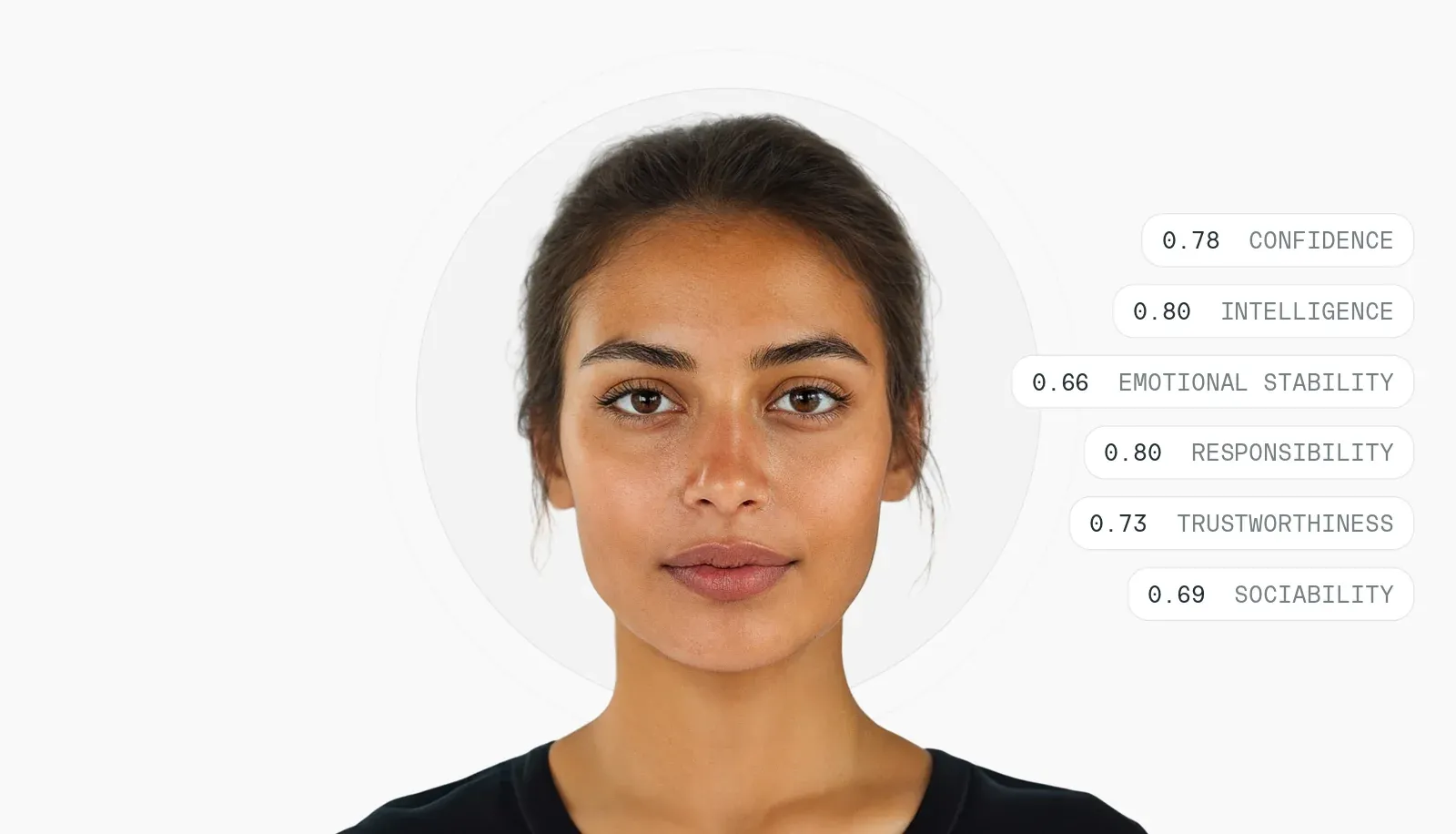
    The same model edited with AI, with the correlations raters in the USA and Canada link to more attractive female faces
    Original photo of the model, before the AI edit

    Original

    Edited with AI

    What the halo effect is

    The halo effect is a mental shortcut. You notice one good thing about a person, and it colors how you judge everything else about them, usually without realizing it.

    The idea is more than a hundred years old. The psychologist Edward Thorndike (1920) looked at how army officers were rated by their superiors on separate qualities such as intelligence, physique, leadership and character. The ratings moved together far more than they should have, as if each officer carried “a halo belonging to the individual as a whole”(3). Thorndike saw it as an error in rating, and it has proved very hard to get rid of.

    “The halo error, like death and taxes, seems inevitable.”
    Jack Feldman, 19864

    Looks turned out to be one of the strongest sources of that halo. In a study titled “What is beautiful is good,” Dion and colleagues (1972) showed people photos of strangers and asked what they were like. People assumed the attractive strangers had more socially desirable personalities, would make better husbands and wives with happier marriages, and would hold more prestigious jobs(5). That is why the halo effect is also known as the “beauty is good” stereotype.

    Most of the early research used Western samples, so Batres and Shiramizu (2023) asked people in 45 countries, across 11 world regions, to rate the same 120 faces. In every region, the faces rated more attractive were also rated more confident, emotionally stable, intelligent, responsible, sociable and trustworthy. For women’s faces rated by people in the USA and Canada, the correlations ran from 0.66 for emotional stability to 0.80 for intelligence and responsibility, which are the numbers on the opening image(1).

    One world region
    Cross-region mean

    Faces rated: male faces

    r = 0.200.400.600.801.00
    Mean
    ConfidenceEmotional stabilityIntelligenceResponsibilitySociabilityTrustworthiness
    0.700.560.610.600.580.63

    Regions: Africa · Asia · Australia & New Zealand · Central America & Mexico · Eastern Europe · Middle East · Scandinavia · South America · United Kingdom · USA & Canada · Western Europe

    Figure 1-Cross-cultural evidence

    Correlations between rated attractiveness and six traits for men’s faces, computed separately in 11 world regions. Every coefficient is positive, and all but one are significant at the 0.01 level (sociability in the Middle East is significant at 0.05). Women’s faces show the same pattern, and for intelligence and responsibility the link is stronger. Source: Batres & Shiramizu (2023), Table 2.

    What it changes, from school to work

    The advantage starts in childhood. A large review of the research found that attractive children, like attractive adults, are judged more positively and treated better than unattractive ones, even by people who know them well (Langlois et al., 2000)(6).

    School is part of it. Teachers tend to judge attractive students as more intelligent and more academically able (Ritts et al., 1992)(7). Attractive teenagers also tend to be better integrated socially and face less stigma, although Gordon and colleagues (2013), who followed them into young adulthood, found those benefits partly offset by social distractions(8).

    At work, it shows up in pay. In US and Canadian surveys where an interviewer rated each person’s looks, Hamermesh and Biddle (1994) found that men rated below average earned about 9% less per hour than average-looking men, and men rated above average earned about 5% more, with education, experience and other job factors taken into account. For women, both gaps were smaller(9).

    Men
    Women
    Above-average looksAverage looksBelow-average looks
    +5.3%
    +3.8%
    Average looks = 0%
    -9.1%
    -5.4%
    -10%0+10%
    Figure 2-Labor market

    Hourly earnings by interviewer-rated looks, compared with average-looking workers of the same sex, with education, experience and other job factors held constant. Pooled estimates from US and Canadian surveys. The penalty for plain looks is slightly larger than the premium for good looks, and both are smaller for women. Source: Hamermesh & Biddle (1994).

    The gap opens before anyone is hired. In a field experiment in Italy, Busetta and colleagues (2021) sent thousands of resumes to real job openings. The resumes were the same except for the photo: an attractive face, an unattractive face or no photo at all. Attractive applicants were called back about half the time. Unattractive applicants were called back 13.5% of the time, well below the 38% who sent no photo, and the penalty was larger for women(10).

    60%40%20%0
    Attractive photoNo photoUnattractive photo
    Figure 3-Hiring

    Share of resumes that got a callback in a field experiment in Italy. The resumes sent to real job openings were identical except for the photo: an attractive face, an unattractive face or none. Italian applicants, 2,420 resumes per group. Source: Busetta, Fiorillo & Palomba (2021).

    Friendships follow the same pattern. In a US experiment by Palmer and Peterson (2021), 849 adults looked at headshots and said how likely they would be to invite each person to join an organization or come to a get-together. Attractive faces got more invitations, and unattractive faces got far fewer(11).

    Joining an organization
    Informal get-together
    Attractive facesAverage facesUnattractive faces
    +0.23
    +0.24
    baseline - 0
    -0.63
    -0.59
    -0.700+0.70
    2.5xIn both settings, the penalty for looking unattractive is about two and a half times the boost for looking attractive.
    Figure 4-Social joining

    In a US experiment, 849 adults each rated four headshots (two men and two women) from an attractive, average or unattractive set, and said how likely they would be to invite each person to join an organization or to an informal get-together, on a 0 to 4 scale. Values are differences from the average set. Source: Palmer & Peterson (2021), Study 2.

    But the penalty is bigger than the prize

    In that last chart, the drop for unattractive faces is about two and a half times the boost for attractive ones.

    Other studies point the same way. When Griffin and Langlois (2006) compared faces of low, medium and high attractiveness side by side, they concluded that “most often, unattractiveness is a disadvantage,” which runs against the beauty-is-good idea(2). The pay data leans the same way, if only a little: in Hamermesh and Biddle’s (1994) words, the penalty for plain looks is “slightly larger than the premium for beauty”(9).

    This side of the bias has its own name, the horn effect, sometimes called the devil effect. One negative feature, such as an unkempt look or a visible flaw, drags down the judgment of the whole person.

    Good looks can even count against you. Evaluators discriminate against attractive candidates for less desirable jobs, because they assume those candidates feel entitled to something better (Lee et al., 2018)(12). In the Italian study, an attractive photo helped with technical and sales jobs but lowered callbacks for professional, skilled and elementary roles (Busetta et al., 2021)(10).

    Why it happens, and why it partly comes true

    The halo works because first impressions are fast. People judge a face within a tenth of a second, and those snap judgments agree closely with the ones they make when they have as long as they like (Willis & Todorov, 2006)(13). A meta-analysis of brain imaging studies found consistent activity in the amygdala, a region involved in emotional evaluation, both when people judge how attractive a face is and when they judge how trustworthy it looks (Bzdok et al., 2011)(14).

    Those judgments shape how people are treated, and over the years, treatment shapes people. On average, attractive adults are a little more outgoing, a little more self-confident and slightly more socially skilled than others (Langlois et al., 2000)(6). One explanation is that being treated as likable gives you more practice at being liked. Langlois and her colleagues weigh that against an evolutionary explanation and treat both as open.

    This is also where the halo effect differs from the Self-Esteem Multiplier, the idea our tenet articles use for the way looking better can raise your self-esteem, with knock-on effects for confidence and wellbeing. The halo runs on how other people see you. The Self-Esteem Multiplier runs on how you see yourself.

    But the stereotype runs well ahead of the reality. Attractive adults are barely more intelligent than anyone else, an effect close to zero (Langlois et al., 2000; Feingold, 1992)(6)(15). Grades are a mixed picture: in a high school study by French and colleagues (2009), looks helped girls’ grades, but once personality and grooming were taken into account, the effect of looks turned negative(16). The idea that a beautiful face advertises good genes (Scheib et al., 1999)(17) or good health has not held up well either. Attractiveness in adolescence did not predict health, then or later (Kalick et al., 1998)(18), and a major review found little evidence that the facial features thought to signal health actually do (Weeden & Sabini, 2005)(19).

    AI systems learned it anyway

    Wrong as much of the stereotype is, it has now spread beyond people. AI systems help screen job applications and sort what people see online, and research shows they have picked up the same bias.

    Kim and colleagues (2025) gave AI models the same job application with a different photo attached each time. The face was the same good-looking person in every photo, and only the setting changed, from a plain portrait to photos at work, relaxing or doing a hobby. Several multimodal models, the kind that read images as well as text, scored the same candidate’s competence differently depending on the photo, although two of the models showed no halo effect. When the extra information came as text, the models were less swayed(20).

    A second study, by Gulati and colleagues (2025), tested seven open-source multimodal models on 91 everyday decisions, using photos of the same people before and after a beauty filter. Attractiveness changed the models’ decisions in 86.2% of the scenarios on average. Asked to choose between a positive and a negative trait, such as trustworthy or untrustworthy, the models linked the filtered faces with the positive trait in 92.6% of scenarios, and the bias weighed most heavily on women(21). The authors point to training: models that learn from images and descriptions of people may come to treat attractiveness as relevant.

    A person’s bias reaches the people they meet, but a screening model applies the same bias to every application it reads.

    Beauty filters show how quickly the halo follows a change in looks. When Gulati and colleagues (2024) had photos of 462 people rated before and after a beauty filter, none was rated less attractive after it, and the filtered versions were also rated more intelligent, trustworthy, sociable and happy(22). The gain was largest for faces that started out rated lower.

    +2.0+1.00
    2 to 33 to 44 to 55 to 6

    Starting attractiveness rating (7-point scale)

    Figure 5-Saturation

    How much a beauty filter raised a face’s attractiveness rating, by how attractive the face was rated before. The lower the starting rating, the bigger the gain, and no face was rated less attractive after the filter. Source: Gulati et al. (2024), Figure 2b.

    What it means if you are the one being judged

    If people have ever treated you differently after a new haircut or losing weight, this is the mechanism at work. The halo runs on what other people see, and that is not quite the face you know. A mirror shows you a flipped version, and cameras distort faces in their own ways, which is why your own view is a poor guide to theirs. A QOVES facial analysis is built for that gap: it measures your face from your photos and compares it with faces from your own background, so you can see the features other people respond to.

    Online, the same idea goes by “pretty privilege”: the everyday advantages attractive people get without earning them. The phrase comes from social media, but the effect it names is the one in this article, and its details change with culture. In a study by Wheeler and Kim (1997), Korean students linked attractive faces with integrity and concern for others, which North American students do not, and did not see them as more dominant or assertive, which North American students do(23).

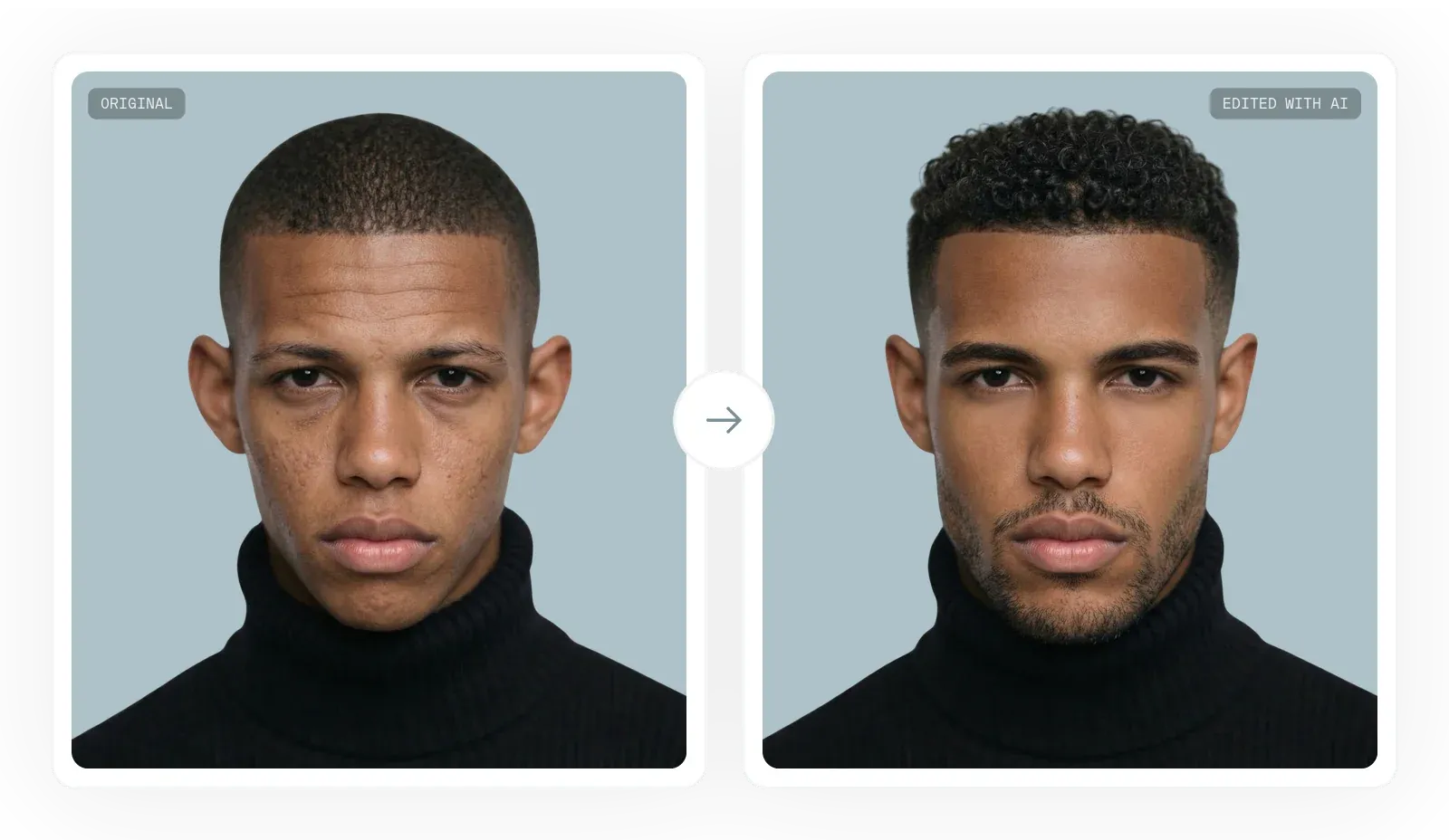
    A male model before and after an AI edit that adds a fuller haircut, a beard and clearer skin
    Figure 6-Edited with AI

    The same model before and after an AI edit: a fuller haircut, a beard and clearer skin. For men’s faces, raters in the USA and Canada linked higher attractiveness with more confidence (r = 0.77), sociability (r = 0.66) and intelligence (r = 0.57). Source: Batres & Shiramizu (2023), Table 2.

    Hair, grooming, skin and weight all change how a face reads, which is why a glow-up can change how people treat you.

    References

    1. 1

      Batres, C., & Shiramizu, V. (2023). Examining the “attractiveness halo effect” across cultures. Current Psychology, 42, 25515-25519.

    2. 2

      Griffin, A. M., & Langlois, J. H. (2006). Stereotype directionality and attractiveness stereotyping: Is beauty good or is ugly bad? Social Cognition, 24(2), 187-206.

    3. 3

      Thorndike, E. L. (1920). A constant error in psychological ratings. Journal of Applied Psychology, 4(1), 25-29.

    4. 4

      Feldman, J. M. (1986). A note on the statistical correction of halo error. Journal of Applied Psychology, 71(1), 173-176.

    5. 5

      Dion, K., Berscheid, E., & Walster, E. (1972). What is beautiful is good. Journal of Personality and Social Psychology, 24(3), 285-290.

    6. 6

      Langlois, J. H., Kalakanis, L., Rubenstein, A. J., Larson, A., Hallam, M., & Smoot, M. (2000). Maxims or myths of beauty? A meta-analytic and theoretical review. Psychological Bulletin, 126(3), 390-423.

    7. 7

      Ritts, V., Patterson, M. L., & Tubbs, M. E. (1992). Expectations, impressions, and judgments of physically attractive students: A review. Review of Educational Research, 62(4), 413-426.

    8. 8

      Gordon, R. A., Crosnoe, R., & Wang, X. (2013). Physical attractiveness and the accumulation of social and human capital in adolescence and young adulthood: Assets and distractions. Monographs of the Society for Research in Child Development, 78(6), 1-137.

    9. 9

      Hamermesh, D. S., & Biddle, J. E. (1994). Beauty and the labor market. American Economic Review, 84(5), 1174-1194. Pooled estimates from the working paper version, NBER Working Paper 4518, Table 6.

    10. 10

      Busetta, G., Fiorillo, F., & Palomba, G. (2021). The impact of attractiveness on job opportunities in Italy: A gender field experiment. Economia Politica, 38(1), 171-201.

    11. 11

      Palmer, C. L., & Peterson, R. D. (2021). Physical attractiveness, halo effects, and social joining. Social Science Quarterly, 102(1), 552-566.

    12. 12

      Lee, M., Pitesa, M., Pillutla, M. M., & Thau, S. (2018). Perceived entitlement causes discrimination against attractive job candidates in the domain of relatively less desirable jobs. Journal of Personality and Social Psychology, 114(3), 422-442.

    13. 13

      Willis, J., & Todorov, A. (2006). First impressions: Making up your mind after a 100-ms exposure to a face. Psychological Science, 17(7), 592-598.

    14. 14

      Bzdok, D., Langner, R., Caspers, S., Kurth, F., Habel, U., Zilles, K., Laird, A., & Eickhoff, S. B. (2011). ALE meta-analysis on facial judgments of trustworthiness and attractiveness. Brain Structure and Function, 215(3-4), 209-223.

    15. 15

      Feingold, A. (1992). Good-looking people are not what we think. Psychological Bulletin, 111(2), 304-341.

    16. 16

      French, M. T., Robins, P. K., Homer, J. F., & Tapsell, L. M. (2009). Effects of physical attractiveness, personality, and grooming on academic performance in high school. Labour Economics, 16(4), 373-382.

    17. 17

      Scheib, J. E., Gangestad, S. W., & Thornhill, R. (1999). Facial attractiveness, symmetry and cues of good genes. Proceedings of the Royal Society of London B, 266(1431), 1913-1917.

    18. 18

      Kalick, S. M., Zebrowitz, L. A., Langlois, J. H., & Johnson, R. M. (1998). Does human facial attractiveness honestly advertise health? Longitudinal data on an evolutionary question. Psychological Science, 9(1), 8-13.

    19. 19

      Weeden, J., & Sabini, J. (2005). Physical attractiveness and health in Western societies: A review. Psychological Bulletin, 131(5), 635-653.

    20. 20

      Kim, K., Ryu, J., Jeon, H., & Suh, B. (2025). Blinded by context: Unveiling the halo effect of MLLM in AI hiring. Findings of the Association for Computational Linguistics: ACL 2025, 26067-26113.

    21. 21

      Gulati, A., D’Incà, M., Sebe, N., Lepri, B., & Oliver, N. (2025). Beauty and the bias: Exploring the impact of attractiveness on multimodal large language models. Proceedings of the AAAI/ACM Conference on AI, Ethics, and Society, 8(2), 1154-1168.

    22. 22

      Gulati, A., Martínez-Garcia, M., Fernández, D., Lozano, M. A., Lepri, B., & Oliver, N. (2024). What is beautiful is still good: The attractiveness halo effect in the era of beauty filters. Royal Society Open Science, 11(11), 240882.

    23. 23

      Wheeler, L., & Kim, Y. (1997). What is beautiful is culturally good: The physical attractiveness stereotype has different content in collectivistic cultures. Personality and Social Psychology Bulletin, 23(8), 795-800.

    How you come across

    See what others see

    Six photos, measured feature by feature and compared with faces from your own background. You see the features other people respond to, and get a plan for the ones you can change.

    1

    Upload Your Photos

    Upload 6 clear photos of your face securely and privately through our online portal.

    Drag and drop file To upload

    POSES REQUIRED

    • Front Face
    • Right Side Profile
    • Left Side Profile
    • Right Quarter Profile
    2

    Facial Assessments

    We measure 160+ facial markers, including skin quality, symmetry, eye shape, brow density, and more.

    • Ear protrusion
    • Chin projection (receding vs balanced)
    • Eyebrow density
    • Nose symmetry
    • Smile line detection
    • Nose symmetry
    3

    Personalized Report

    You’ll receive a plan highlighting your strengths, areas for improvement, and best ways to improve your appearance.

    Emma’s Report

    January 16, 2026

    20μm60μmAVERAGE WRINKLE DEPTH25.00μm
    OUTER CORNERMIDINNER CORNER-25-20-15-10-50510152025

    Explanation

    Your forehead wrinkle depth aligns with expectations for your age and demographic, falling on the lower end of our predicted range.

    Your Questions

    Frequently asked questions

    It is the tendency to assume that people with attractive faces also have other good qualities, such as intelligence, kindness or trustworthiness, without any evidence for them. Psychologists also call it the “beauty is good” stereotype. A study of raters in 45 countries found it in all 11 world regions it covered (Batres & Shiramizu, 2023).

    Edward Thorndike (1920) named it, after noticing that superiors’ ratings of army officers on separate qualities moved together, as if each officer had one overall halo. The link to looks was shown by Dion and colleagues (1972) in a study called “What is beautiful is good.”

    On average, yes, though the gap is modest. In US and Canadian survey data, men rated below average in looks earned about 9% less per hour than average-looking men, and men rated above average earned about 5% more; the gaps for women were smaller (Hamermesh & Biddle, 1994). In a field experiment in Italy, applicants with an attractive photo were called back far more often than those with an unattractive one (Busetta et al., 2021).

    The horn effect, sometimes called the devil effect, where one negative feature colors the judgment of the whole person. Research on faces suggests this side is often the stronger one: looking unattractive tends to cost more than looking attractive earns (Griffin & Langlois, 2006).

    Yes. Pretty privilege is the everyday name for the advantages the halo effect gives attractive people, from friendlier treatment to more job callbacks. The phrase comes from social media, and the effect it describes is well documented.

    It can. Testing seven AI models on 91 decisions, Gulati and colleagues (2025) found that attractiveness changed the answer in 86.2% of scenarios on average, and that the models linked more attractive versions of the same faces with positive traits. In an AI hiring study, some models also scored the same candidate differently depending on the photo attached (Kim et al., 2025).

    Personalized Analysis

    Get your ownpersonalized plan

    Find out which of your features shape the first impression you make,and get a plan for the ones you can change.

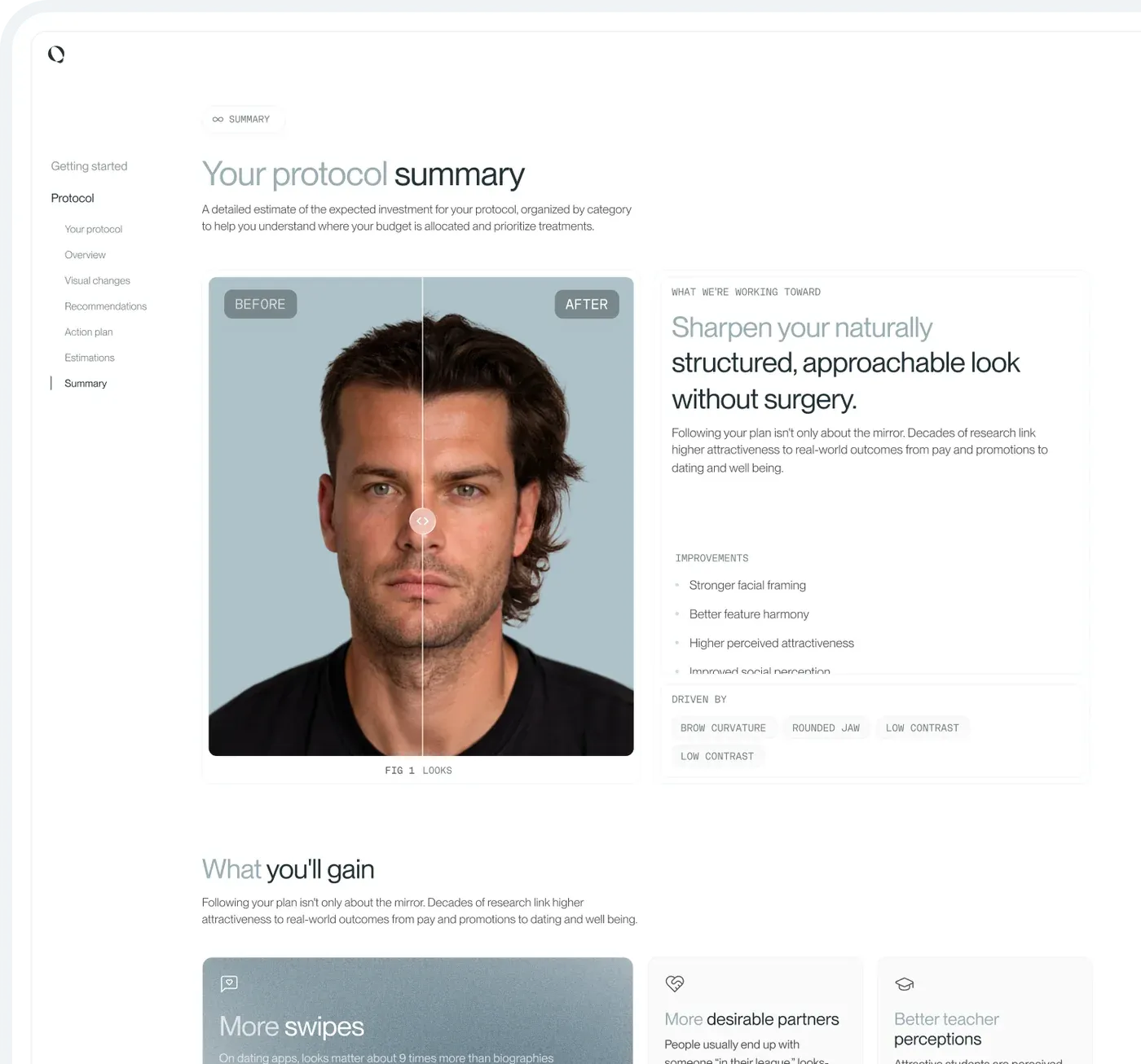
    The QOVES report showing a personalized facial analysis plan