What Is a Neck Lift?
March 1, 2026
A neck lift is one of the most common cosmetic surgeries, and it does one main thing: it removes excess skin and fat from the neck.
If you want to clear out the wrinkles and creases there and leave the skin smoother, it may be the right option for you. It can change your facial profile quite a bit.
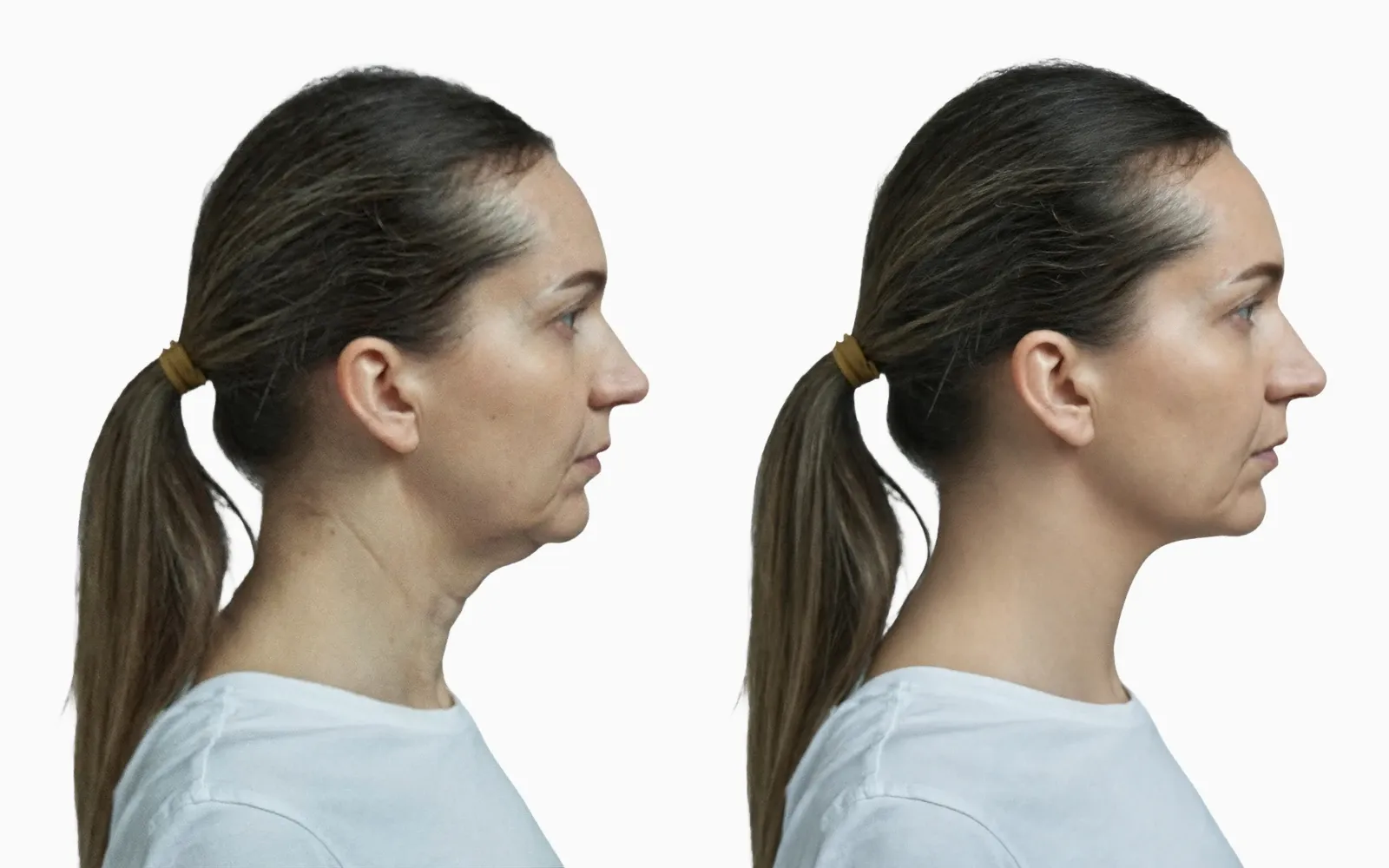
Simulated profile demonstration of a neck lift with platysmaplasty. Cervicomental angle sharpened to 95-105 degrees, submental fullness removed, and platysmal bands tightened.
What is a neck lift?
A neck lift is really a set of procedures aimed at improving how the neck looks. The medical name for it is submental lipectomy, or lower rhytidectomy. (1) Which procedure, or which combination, you end up having depends on the result you are after.
One thing worth knowing first: neck contouring can be folded into a facelift, but if you are happy with the rest of your face, it can be done on its own. (2, 3)
A neck lift can include one or more of the following:
- Removing excess skin (cervicoplasty).
- Altering or removing neck muscles (platysmaplasty).
- Removing excess fat with liposuction.
- Botox injections to address fullness.
- Kybella injections to dissolve excess fat under the chin.
- Lasers, ultrasound, fillers, radiofrequency, intense pulsed light, and several other neck-tightening techniques.
Why would you get a neck lift?
Your surgeon will go over everything with you beforehand, and you will get more out of that meeting if your goals are already clear in your head. (4)
The most common things people want fixed are a turkey wattle neck and excess fat and skin. You also need to be healthy enough to undergo the procedure in the first place.

Full neck lift with platysmaplasty holds for 10-15 years. Submental liposuction alone is good for younger candidates with skin elasticity but addresses fat only; thread lifts dissolve within 1-2 years.
Neck lift consultation
During the consultation, you and your surgeon should walk through your goals together and get a full picture of the options on the table. One of the main things to cover is the risks and side effects, along with the results you can realistically expect. The options usually break down like this:
- Turkey wattle. The surgeon makes small cuts under your chin, behind your neck, or both, to reach the platysma muscle, and may remove part of it. This can be done under local or general anesthesia. (5, 6)
- Botox injections. These can be used alongside the turkey wattle procedure or instead of it, relaxing the platysma muscle that creates the fullness or banding. (7)
- Liposuction. A small cut below the chin lets the surgeon remove excess fat. If you are having more than one procedure, this often comes first, and the incisions are then stitched and bandaged, so following your aftercare instructions matters here. (8, 9)
- Excess neck skin. The surgeon trims certain parts of the neck skin, then lifts it into place and secures it with stitches or tissue glue. You will probably wear a compression bandage for about a week afterward. (10, 11)

Fat-only concerns respond to Kybella or lipo. Established platysmal banding and skin laxity need surgical neck lift with platysmaplasty — the only intervention that addresses all three components.
How to prepare for a neck lift
Certain medications and supplements have to be stopped before the procedure to lower the risk of heavy bleeding. At the history-taking visit, give your doctor your full medical history, including any drug allergies. Some people are allergic to anesthesia, which is rare but worth flagging.
If you smoke, you should quit completely for two months, one before the procedure and one after, since that is what lets your incisions heal properly. Eating well before and after can help the healing along too.
You will probably need some time off work, so ask your doctor how long before you go back. Usually it is about a week, though sometimes more.
It helps to get your home ready as well. Set up a recovery area that includes:
- Ice packs, towels, and gauze.
- Comfortable clothes.
- Antibacterial ointment and any other medications your doctor prescribes.
- A phone kept within reach, since you will be lying or sitting most of the time.
- Pillows that keep your head in a comfortable position.
- Someone to help you for at least the first 24 hours, ideally staying with you until you are fully recovered.
On the day of surgery, wear loose, comfortable clothing. Pick something you will not have to pull over your neck and head.
Neck lift risks
For the first few weeks you will have a number of side effects, and all of them are normal. They include bruising and swelling for several days, a feeling of tightness or tingling, and sensations like pulling, numbness, or burning.
Infection is a possibility with any surgery, so check your temperature regularly. If you get a fever or notice an unusual discharge, contact your doctor right away.
Other risks tied to neck lift procedures include:
- Permanent scarring.
- Permanent numbness.
- Hair loss along the incisions.
- Skin loss.
- Skin discoloration or puckering.
This is why it pays to find an experienced surgeon who has done your specific procedure many times. If these side effects show up, you will not be happy with the results. (12)
Recovery after a neck lift
Healing takes time. If your job does not involve much physical activity, you can usually go back in 10 to 14 days, while a more physical job may mean waiting longer, around 3 to 4 weeks. The more time you give the healing process, the better your results will be. (13)
Neck lift cost
Most health insurance policies do not cover cosmetic surgery, though in some cases they do. Ask your insurance company whether they will cover the procedure. If it is meant to correct an existing medical condition, it may be covered, and your doctor can help by writing a letter laying out the details of your case.
A neck lift can cost more than $5,000, depending on the procedure and your surgeon's level of experience.