What Is Double Chin Surgery?
March 1, 2026
A double chin is far more common than most people assume. If you have one and want it gone, a surgeon might suggest neck liposuction, a neck lift, or some mix of the two.
There is no single operation called double chin surgery. Your surgeon combines a few approaches to clear the extra fat from under your chin and tighten the skin on your neck, leaving you with a firmer, more defined chin and a sharper profile.
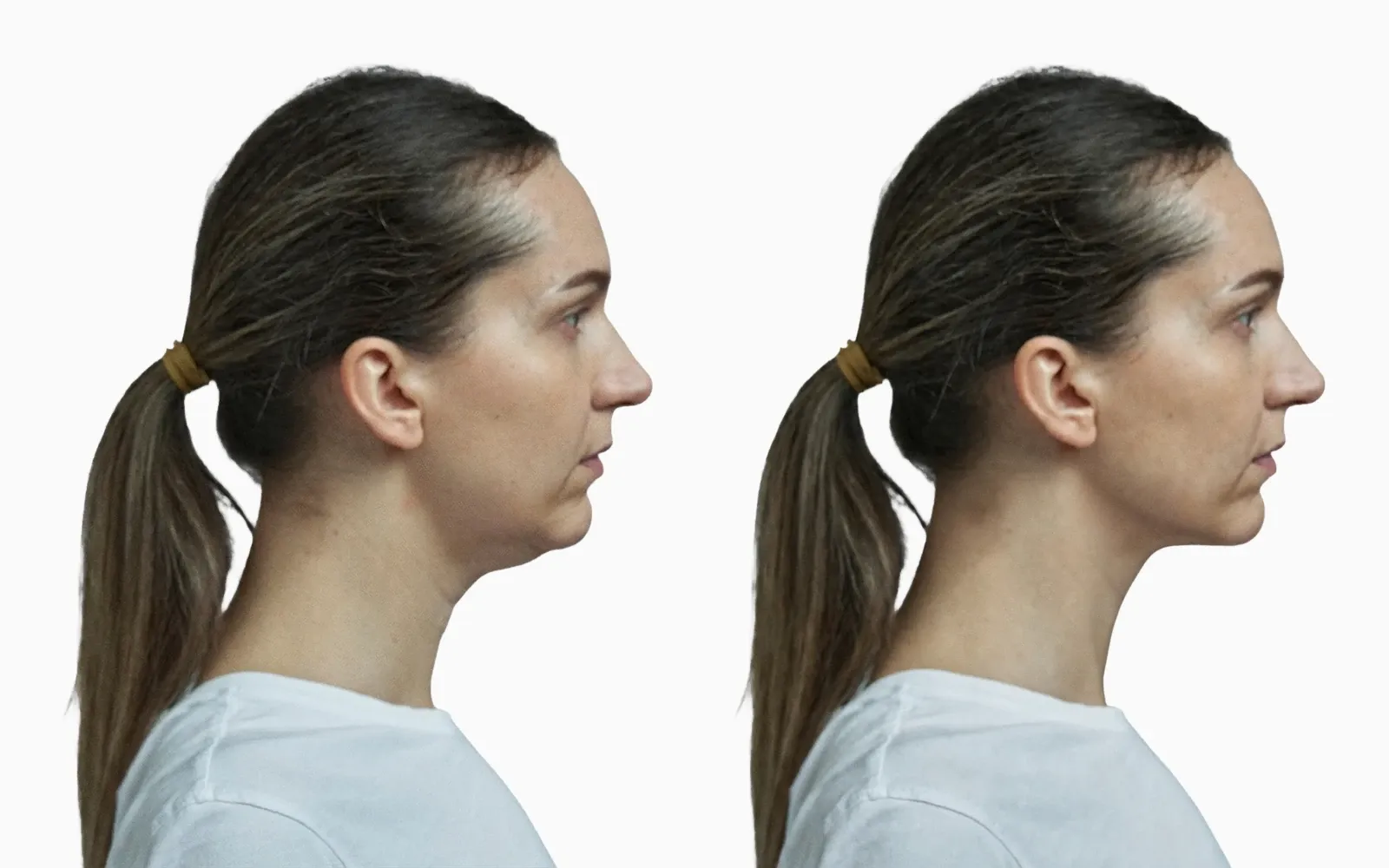
Simulated profile demonstration of submental liposuction with platysma plication. Submental fat eliminated, jawline sharpened, cervicomental angle restored.
What is double chin surgery?
The neck and chin are usually among the first places to show their age, and the most obvious sign is often fat settling under the chin. Pair that with loose skin and it can change your whole profile, the jawline most of all (1).
A few procedures can correct a double chin.
- Chin liposuction. This removes the fat that has gathered under your chin.
- Submentoplasty. This combines two approaches: liposuction to take out the extra fat, plus small incisions to tighten the muscles in the chin and neck.
- Neck lift (lower rhytidectomy). This improves your appearance by removing excess skin and tightening the neck muscles.
Any of these can deal with a double chin, though people with saggy, non-elastic skin may not be good candidates for liposuction or submentoplasty. Your surgeon will point you to the right option based on your situation (2).
What are the benefits?
People who have the surgery tend to report a few things.
- A better overall look, with a younger, fresher appearance.
- Smoother skin around the neck and chin.
- A more defined neck and chin, and a cleaner facial profile.

Surgical submental lipo with platysmaplasty offers the longest-lasting result (10+ years). Kybella and CoolSculpting are non-surgical alternatives but typically need multiple sessions and don't address platysmal banding.
What are the risks?
Cosmetic neck and chin procedures are generally safe and serious problems are uncommon. It is still surgery, though, so there are risks worth being aware of (3).
- Facial asymmetry.
- Bleeding.
- Blood clots.
- Anesthesia complications such as nausea, vomiting, or trouble walking afterward.
- Loss of sensation from nerve damage.
- Irreversible damage to muscles, blood vessels, or organs.
- Hair loss near the incision sites.
- Blood pooling under the skin, known as a hematoma, that needs to be drained.
- Incisions that heal poorly.
- Infections.
- Nerve injuries that change skin sensation, cause numbness, or lead to weakness.
- Pain or swelling that lingers.
- Lung and heart problems.
- Results you are not happy with, which may need a follow-up surgery.
- Skin discoloration.
- Scarring.
- Rippling.
- Skin irregularities.
What to expect afterward
Right after the procedure, expect some discomfort and swelling, and your neck and chin may feel tighter than usual. That is normal given the swelling and bruising (4).
Surgeons sometimes place small drains to keep fluid and blood from building up around the neck and chin. These usually come out after about two days.
Your surgeon will probably have you put an antibiotic ointment on the incisions for a while, and you will want to stay out of the sun and keep water off your face and chin for several days (5).
Recovery time depends on the technique. With liposuction you might need a few days to a week before getting back to your routine, but if you had a neck lift, plan on closer to two weeks before returning to work.
How to prepare
Try to keep your expectations realistic about both the results and the recovery. The best way to get there is to ask your doctor plenty of questions, starting with these (6).
- What results can I realistically expect?
- Is there any reason this procedure might not be right for me?
- How long does recovery usually take?
- What complications are possible?
- Am I at higher risk for any particular complication?
- How can we keep the risks and side effects as low as possible?
- Is there anything I should watch for during recovery?
Beyond the questions, line up someone to drive you home, wear comfortable clothes, and fill your prescriptions ahead of time so everything is ready when recovery starts.
How much does it cost?
Cost depends on the operation. Neck lifts are more invasive and take longer to recover from than liposuction, and the total also covers your surgeon's fees, medications, instruments, the operating room, and anesthesia.
The American Board of Cosmetic Surgery puts the average cost between $1,200 and $12,700.
Double chin surgery versus Kybella
Kybella is an FDA-approved injectable that treats a double chin without surgery by breaking the fat down. Its active ingredient, deoxycholic acid, dissolves fat in the body, including under the chin and neck (7).
It differs from surgery in a few ways.
- Kybella needs several monthly sessions to get the result you want. For most people, six sessions are enough to clear the double chin.
- A topical local anesthetic is applied to the chin and neck before treatment.
- Common side effects include pain, redness, swelling, bruising, and numbness. An allergy to the medication or injury to the facial nerves is rare.
- The average cost is between $1,200 and $1,800 per session, so liposuction may be the better value if you need several sessions to remove the double chin.
- Results last a long time, since the fat cells are destroyed for good.