What Is CoolSculpting?
March 1, 2026
If you want to soften wrinkles but the thought of injecting botulinum toxin puts you off, focused cold therapy is a newer route worth knowing about. Also called cryoneuromodulation, it relaxes the muscles behind frown lines and forehead creases with pressurized nitrous oxide instead of a neurotoxin, so nothing toxic stays in your skin.
For now there is just one approved, widely marketed version: Iovera, made by Myoscience Inc, the company that pioneered the technique for wrinkles. It is early days, but the results so far are encouraging.
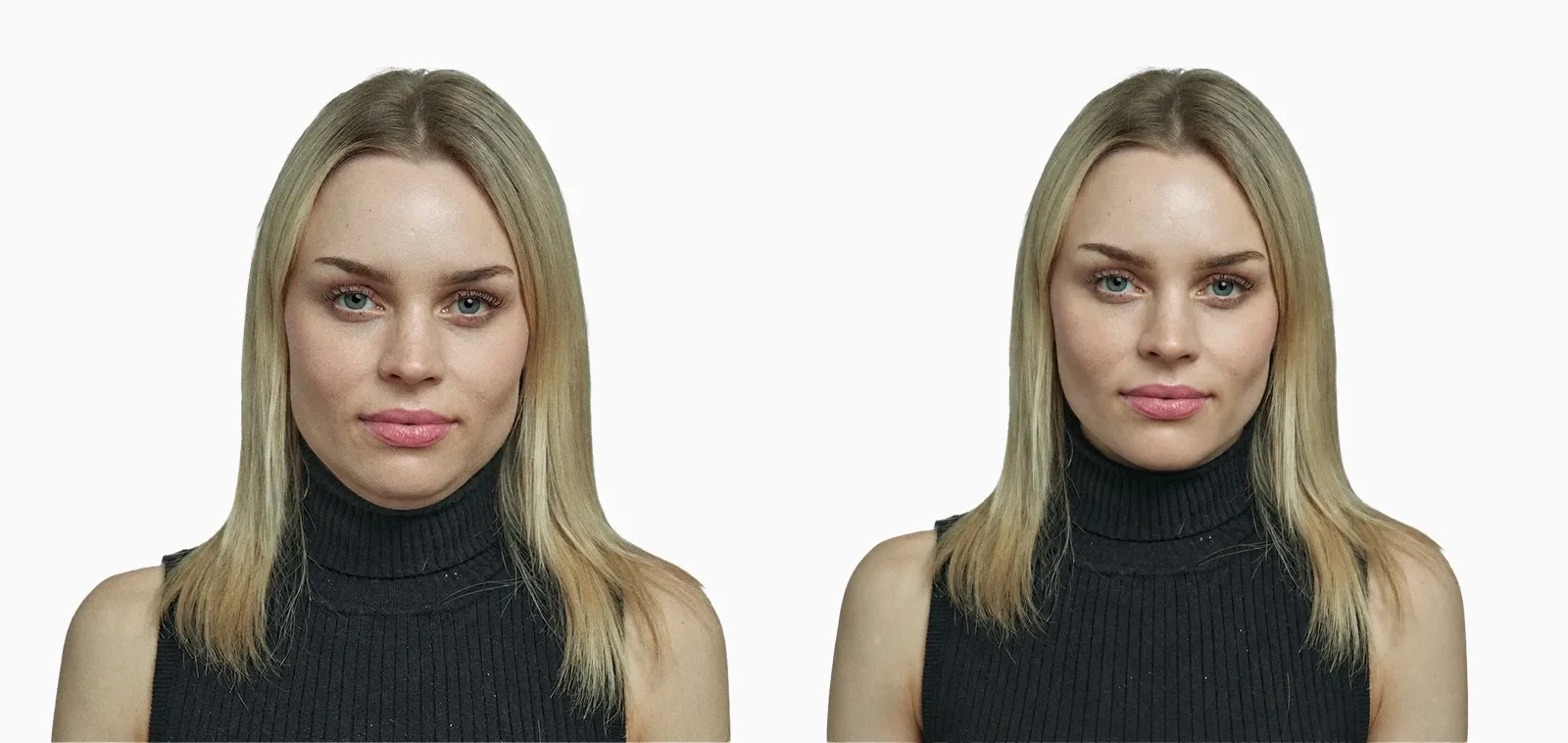
Simulated demonstration of focused cold therapy on submental fat. Roughly 20-25% of treated fat is permanently removed per session; full result appears 8-12 weeks after treatment.
What is focused cold therapy?
Focused cold therapy, sometimes branded Cold Tox or Frotox, is a minimally invasive way to smooth wrinkles on the forehead and between the eyebrows. It works by aiming focused cold nitrous oxide at the nerves in those spots, numbing them so the muscles that crease the skin relax.
Its big selling point is speed. The effect shows up right after the session with no toxin left in your body, whereas Botox takes anywhere from a day to four days to kick in. For anyone who wants results now, that is the draw.
The smoothing lasts about three to four months. That comfortably beats wrinkle creams, and sits in the same range as Botox and dermal fillers. (1, 2)
How does focused cold therapy work?
The treatment leans on a process called second-degree Wallerian degeneration, the same thing that happens when a nerve fiber is cut or crushed. Blocking the nerve this way stops it carrying the signals that tell a muscle to contract, so the muscle relaxes and the skin above it smooths out.
The block is temporary. Nerve cells begin regenerating within about 24 hours, and over three to four months the signals return and the muscle works normally again.
For frown lines and forehead creases, the target is the temporal branch of the facial nerve, which feeds the frontalis muscle that raises your eyebrows. Relax that muscle and the lines above it ease.
The cold may do a little more than relax muscles. Applied to a small patch of skin, pressurized nitrous oxide can nudge collagen production, which firms the skin, and it may also flush waste from the area, calm inflammation, and tighten pores. The treatment is new, though, so these extra effects still need more research to confirm. (3)
Cosmetic uses of focused cold therapy
Because it is still new, focused cold therapy is used on small areas for now, mainly the lines between the eyebrows. It also works on forehead creases, since the nerves it targets enter near the temples.
Right after a session you should see a clear drop in the vertical and horizontal lines across the forehead and between the brows. The smoothing holds for three to four months, until the nerves recover.
Not everyone responds the same way. Some people need extra sessions or more focused treatment to block the nerve fully, and a small share do not respond at all. It is worth talking through your goals and the alternatives with a provider who knows the procedure, so you know it is the right fit before you book. (4)

Most CoolSculpting areas need 1-3 sessions for a visibly reduced fat layer. The chin is the most common cosmetic target — 1-3 sessions spaced 6-8 weeks apart.
What happens during a session?
Your provider starts by taking a full medical history to confirm you are a good candidate, and you sign a consent form once you understand the benefits, risks, and side effects. They may take before photos too.
The session itself runs about 15 minutes. After cleaning your face, the practitioner uses a TENS device (transcutaneous electrical nerve stimulation) to find the exact path of the facial nerve and its branches, which twitch so the treatment points can be marked. A little local anesthetic numbs the area, and then the treatment begins.
The device has closed-tipped needles that sit in the skin along the nerve path. Liquid nitrogen runs into those sealed needles, so nothing escapes into your skin. At the tip the nitrogen turns to nitrous oxide gas, which pulls heat out of the surrounding tissue and holds a pocket of cold for 60 seconds.
Most people say they do not feel cold at all, just pressure where the needle sits. Some feel pain, but describe it as bearable. Afterwards your provider gives you a soothing cream for any redness or tenderness, and you are free to go for the rest of the day.
Risks and side effects
Studies have not turned up any serious side effects. The common ones are mild and local: redness, tenderness, pain, bruising, and a little inflammation where the needles go in.
Others can include:
- Headache
- Eyebrow drooping
- Eyelid or eyebrow heaviness
- Nausea
All of these settle on their own by your follow-up, with no medication or extra treatment needed. (5)
Aftercare
Following your provider's aftercare advice is what protects the result. A few basics:
- You should clean the injected areas gently for several days after the procedure.
- Avoid applying heavy makeup and facial products on the injected areas, especially if you have side effects such as redness, tenderness, or inflammation.
- If the local pain, swelling, or inflammation do not disappear within few days from the day of the procedure, your doctor may prescribe anti-inflammatory, pain management medications such as Ibuprofen to decrease the pain and relieve the swelling and inflammation.
Who should not have it?
Because it is minimally invasive, most healthy people with realistic expectations are fine to have focused cold therapy. The exceptions are wrinkles at the extremes, very deep or very shallow, where it tends not to help. A licensed provider can tell you which camp yours fall into.
It also simply does not work for everyone. If the nerve is not fully switched off, the muscle keeps contracting and the wrinkle stays, and another treatment that relaxes the muscle becomes the better option.

Cryolipolysis works on pinchable, localized fat deposits — not visceral fat, not large-volume weight loss. For higher BMI or significant laxity, liposuction or weight-management programs are the better fit.
Who can perform it?
This is a doctor's procedure. Right now only cosmetic and plastic surgeons are cleared to perform it, so it is fair to ask about a practitioner's training and experience before you start.
How much does it cost?
Since the treatment is new and not widely offered, the price moves with the practitioner's experience and how many sessions you need. As a rough guide, expect around £300 a session.
Common questions
What types of focused cold therapy are available?
For now, just one: Iovera, made by Myoscience and FDA-approved for treating peripheral nerves. Its patented smart tip carries three closed-tipped needles that deliver the nitrous oxide, plus a built-in warmer that keeps your skin comfortable during the procedure. More versions are in research, waiting on approval for cosmetic use.
How long is the recovery?
There is not one. The procedure is minimally invasive, so you can get on with your day straight away.
Is it covered by insurance?
Usually not, since it is cosmetic. It is still worth checking with your provider in case your situation qualifies.
What do the studies say?
Most trials so far find it works for the majority of people as a non-surgical option for wrinkles, and it is already approved for facial lines in both the United States and Europe.
The main study, led by Dr. Brauer, treated the temporal branch of the facial nerve in 63 patients. Thirty-two were randomly given immediate treatment, and the other 31 formed a control group with delayed treatment. Blinded assessors scored wrinkles on a five-point scale, and the treated group improved both right after the session and 30 days later.
By the 30-day mark, 93% of the treated group saw at least a 25% improvement and 84% saw a 50% improvement. On the five-point scale, 96.9% of the treated group improved by a point or more, against 6.5% of the controls, and 93.8% improved by two points or more, against none of the controls. (6)
Will my nerves be permanently damaged?
They should not be. Used properly, the aim is to switch the nerve off, not harm it. The technique has been refined over years: hollow needles concentrate the cold and lower the temperature right around the nerve, and the effect starts immediately.
It also lets the provider single out the nerve to the frontalis muscle, which helps avoid the dropped eyebrow that sometimes follows Botox.